
In online business, chargebacks remain one of the biggest financial threats for sellers. When a customer disputes a payment through their bank, the transaction amount is withdrawn from your account, often accompanied by a penalty fee ranging from $15 – $30 per case. More importantly, if your chargeback rate exceeds 1%, your Stripe account may be classified as high-risk, resulting in account restrictions or even permanent suspension.
To address this issue, Stripe has developed an advanced proactive protection system often referred to as chargeback prevention. Instead of waiting for disputes to escalate through traditional banking channels, Stripe uses early detection mechanisms to identify potential disputes before they officially become chargebacks. This approach helps Stripe maintain an average global dispute rate below 1%, providing businesses with greater stability and long-term account security.
At EasyPay onBoard, we consistently recommend that online businesses leverage these Stripe tools to protect revenue and preserve payment processing reliability.
How Does Stripe Prevent Chargebacks?
Stripe’s key advantage lies in its proactive infrastructure. Rather than waiting for issuing banks to process formal customer complaints, Stripe monitors early warning signals from major card networks such as Visa and Mastercard.
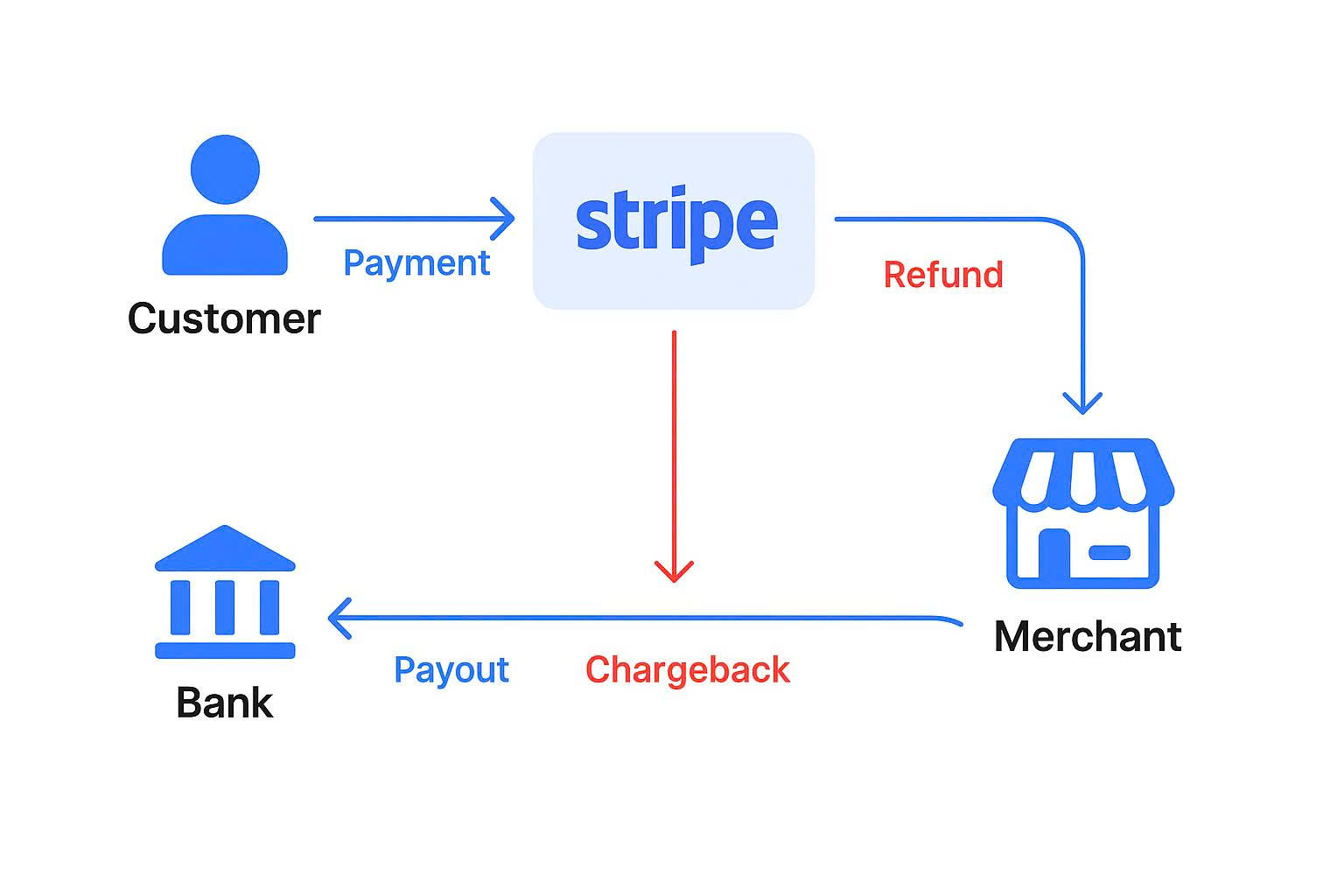
When Stripe detects signs that a customer may initiate a dispute, the platform can automatically issue a refund before the chargeback is officially filed. Because the issuing bank never receives a finalized dispute request, the transaction is not recorded as an official chargeback.
This process creates several benefits:
- Customers receive their money back quickly
- Businesses avoid chargeback fees
- Stripe accounts maintain lower dispute ratios
- Merchant reputation remains stronger
This preventive system shifts chargeback management from reactive defense to proactive risk prevention.
Cash flow principles in the Stripe system
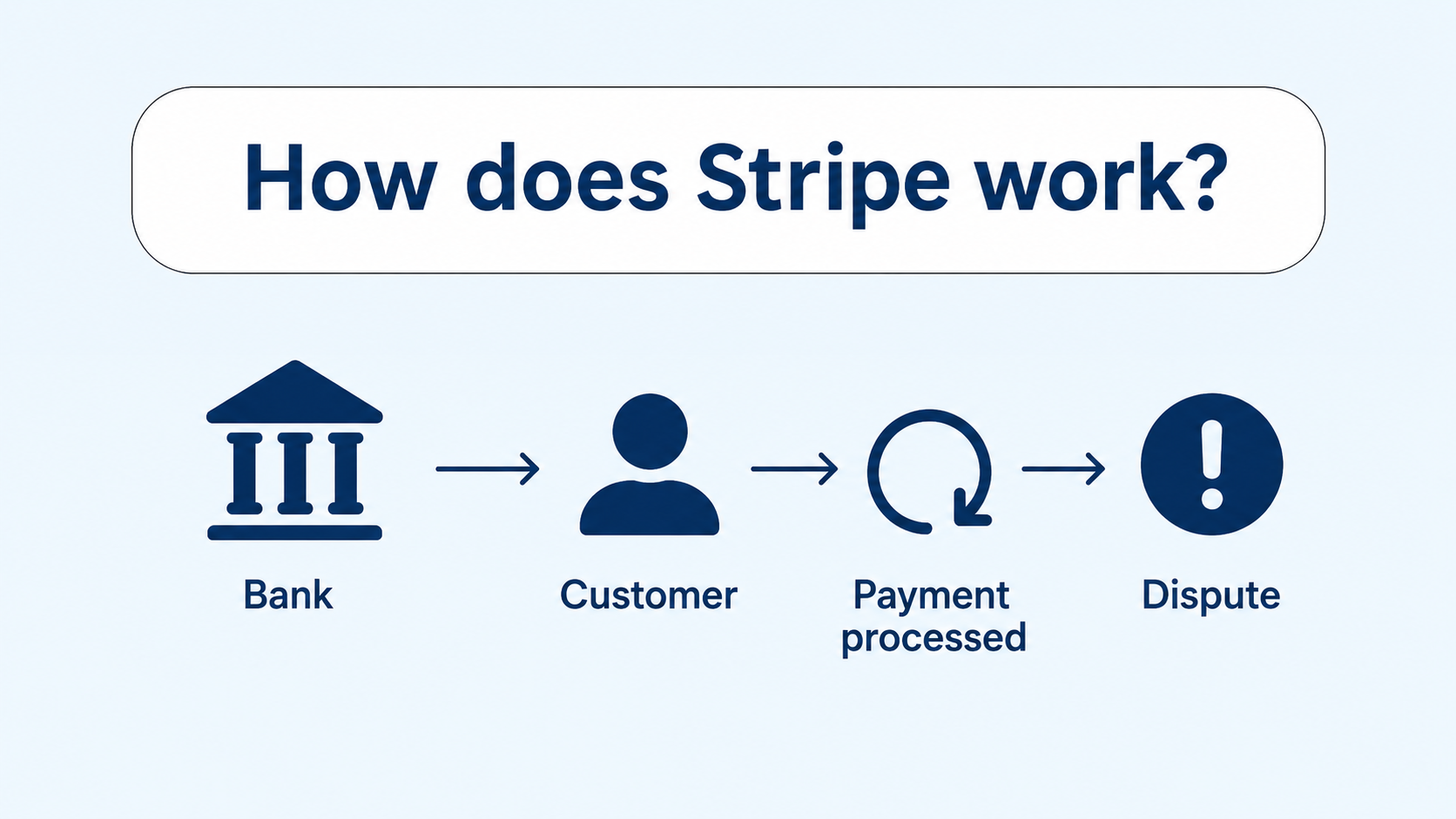
To understand why Stripe can act so quickly, it’s important to understand how payment processing works.
When a customer makes a purchase:
- Stripe processes and temporarily holds the payment
- Funds are reviewed for fraud or suspicious behavior
- Stripe releases payouts to merchants after a holding period, typically 2–7 days
Because Stripe controls this intermediate stage, it can intervene before disputes reach banks. If refund requests or dispute signals appear during this window, Stripe can trigger refunds immediately, effectively stopping formal chargebacks before they are recorded. This unique control over payment flow allows Stripe to redesign dispute prevention at the system level.
Why Do Chargebacks Happen?
Even with Stripe’s advanced prevention systems, the root causes of chargebacks often stem from customer behavior or business process failures.
Common reasons include:
- Product or service not delivered
- Item significantly different from description
- Customer confusion over billing descriptors
- Unauthorized or fraudulent card usage
- Duplicate charges
- Poor refund communication
- Unclear customer support channels
In many cases, customers file disputes simply because they believe contacting their bank is faster than reaching out to the business directly.
Small operational issues can quickly escalate into formal disputes if not properly managed.
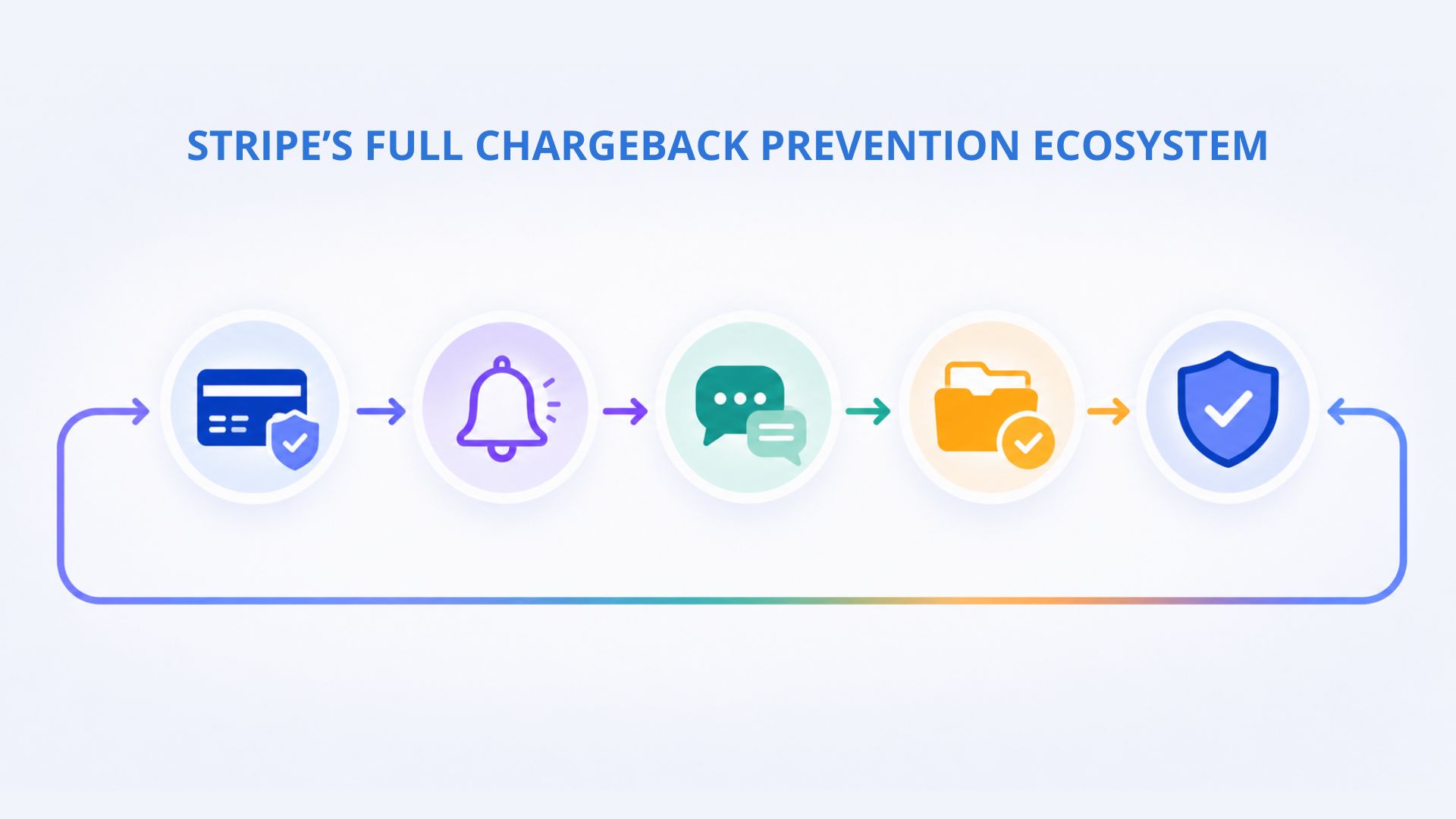
Stripe’s Full Chargeback Prevention Ecosystem
Stripe’s protection strategy goes beyond simple refund automation.
1. Stripe Radar
Stripe Radar uses artificial intelligence trained on billions of global transactions to analyze:
- Device behavior
- IP addresses
- Geolocation
- Transaction frequency
- Card reputation
- Behavioral anomalies
Suspicious transactions are blocked or flagged before payment is completed.
2. Early Fraud Warnings & Early Dispute Detection
Stripe receives pre-dispute alerts from card networks, allowing merchants to refund transactions before official disputes are filed.
This significantly reduces:
- Chargeback fees
- Account risk
- Dispute rate percentages
3. Dispute Management Dashboard
If disputes still occur, Stripe provides merchants with tools to quickly submit evidence, including:
- Invoices
- Shipping confirmations
- Customer communication records
- Refund policies
- Billing descriptors
This streamlined system improves win rates and reduces manual workload.
4. Merchant Best Practices
Stripe also emphasizes preventive operational improvements:
- Clear refund policies
- Accurate billing descriptors
- Immediate payment confirmation emails
- Responsive customer support
- Transparent product descriptions
These measures reduce customer confusion and lower dispute probability.
Why Keeping Disputes Below 1% Matters
Stripe and card networks closely monitor merchant dispute rates.
- Below 0.9%: Healthy account status
- Between 0.9%-1%: Warning zone
- Above 1%: Potential account review, reserve requirements, or termination
Maintaining a low dispute rate is not just about avoiding fees it directly impacts:
- Payment processor trust
- Business scalability
- Cash flow stability
- Long-term merchant account survival
Conclusion
Stripe has changed the way we view chargebacks. Because it’s a consequence that needs to be addressed, Stripe’s success can have repercussions. With tools like Charge Prevention, Radar, and Early Dispute Detection, Stripe proactively detects early, automatically refunds, and helps businesses maintain a dispute rate consistently below 1%. In the online business environment, where every transaction carries risk, keeping Stripe accounts secure is not just a technical requirement but a survival strategy. Thanks to its proactive and intelligent approach, Stripe is proving that protecting businesses from chargebacks is not just a defense, but an integral part of superior robustness.
EasyPay onBoard – Your success is our satisfaction