
What makes customers choose your product over a competitor’s? Why are there brands that consumers can recognize instantly just by seeing their logo, colors, or a familiar slogan?
It is not simply the result of advertising. Behind a brand’s ability to be recognized, trusted, and chosen is an intangible asset built over time: brand equity.
A brand with strong brand equity does not always have to compete primarily on price. Customers tend to trust it more, are more willing to try new products, return for repeat purchases, and recommend the brand to others.
So, what exactly is brand equity? What factors contribute to it, and what can businesses do to build brand equity sustainably?
What Is Brand Equity?
Brand equity is the value a brand creates through customers’ perceptions, experiences, and responses toward that brand.
Simply put, if two products have similar quality and prices, but customers still prefer one particular brand because they feel more familiar with, trust, or like it, that additional value is an example of brand equity.
Brand equity can be either positive or negative.
Positive Brand Equity
When a brand has strong equity, customers are more likely to:
- Recognize and remember the brand easily.
- Have a higher level of trust.
- Be less sensitive to reasonable price changes.
- Purchase the products again.
- Be willing to try new products from the brand.
- Recommend the brand to friends and family.
Negative Brand Equity
On the other hand, poor experiences with product quality, delivery, customer service, or after-sales support can weaken a brand’s value.
When trust declines, customers may switch to competitors even when the products themselves are not significantly different.
The key point is that brand equity is not revenue, profit, or an asset that can be directly recorded on a company’s balance sheet. It is an intangible value that exists in customers’ minds but can have a direct impact on business performance.
Why Is Brand Equity Important to Businesses?
In a market filled with similar products, customers do not always have enough time to research every option. They often rely on familiar signals such as brand recognition, reviews, previous experiences, and trust.
That is why brand equity can become a long-term competitive advantage.
A strong brand can:
- Reduce dependence on advertising: When customers already know and trust a brand, the business does not have to start from zero every time it wants to generate sales.
- Increase repeat purchases: Positive experiences encourage customers to continue choosing the same brand.
- Make it easier to launch new products: A trusted brand can introduce new products or product lines more easily.
- Create a competitive advantage: Competitors can copy a product, but it is much harder to copy the trust and relationships a brand has built with its customers.
- Increase customer lifetime value: When customers return more often and refer new buyers, the long-term value of each customer increases.
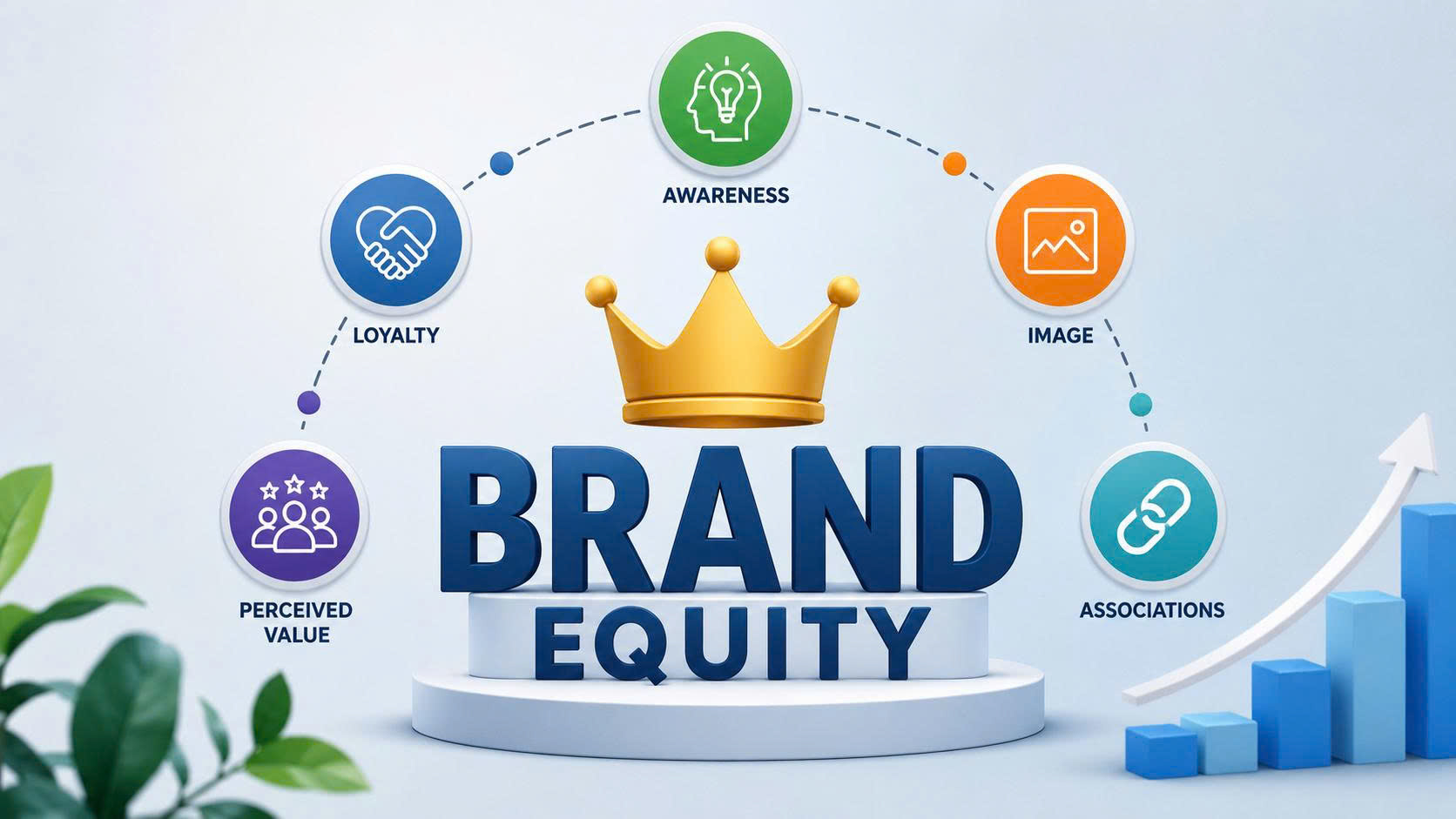
5 Key Elements of Brand Equity
Building sustainable brand equity requires businesses to develop multiple elements rather than focusing only on logos or advertising.
1. Brand Awareness
Brand awareness refers to the extent to which customers know, recognize, and remember a brand.
A brand with high awareness is more likely to come to mind when customers have a need related to its products.
However, being seen frequently does not automatically mean a brand has strong equity.
The goal is not simply to make customers aware of the brand, but to make them remember it in the right purchasing context.
2. Brand Loyalty
Brand loyalty reflects the extent to which customers continue choosing a particular brand instead of switching to competitors.
Loyalty is built through multiple factors, including product quality, purchasing experience, customer service, trust, and positive emotional associations.
A repeat customer does not only generate stable revenue but can also become a natural brand advocate.
3. Brand Image
Brand image is how customers perceive a brand.
They may view a brand as:
- Professional.
- Reliable.
- Premium.
- Youthful.
- Creative.
- Friendly.
- Minimalist.
- Unique.
This perception is shaped by the overall customer experience, including the product, design, content, packaging, website, advertising, and the way the brand communicates with customers.

4. Brand Associations
Brand associations are the images, emotions, values, or memories that come to customers’ minds when they think about a brand.
For example, one brand may be associated with innovation, another with sustainability, and another with a premium experience.
The clearer and more consistent these associations are, the easier the brand is to remember.
5. Perceived Value
Perceived value is how customers evaluate the value a product and brand provide compared with the cost they pay. Perceived value does not come only from product features.
It can also come from:
- Quality.
- Design.
- Service.
- Brand reputation.
- Shopping experience.
- After-sales support.
- Convenience.
- Emotional benefits of using the product.
When perceived value is high, customers may be willing to pay a higher price because they feel the overall value they receive justifies the cost.

6 Effective Ways to Increase Brand Equity
1. Define Your Brand’s Core Values
Before trying to make customers remember your brand, you need to determine what you want them to remember you for.
Core values help answer questions such as:
- What problem does the brand exist to solve?
- Who is the target customer?
- How is the brand different from competitors?
- What do you want customers to feel?
- What values must the brand consistently maintain?
For example, Apple has built much of its brand identity around innovation, design, and a distinctive technology experience.
The goal is not to copy Apple’s branding strategy, but to identify a value system that fits your own business.
When core values are clear, your products, marketing content, and customer experience can all follow the same direction.
2. Build a Memorable Brand Message
Customers are exposed to thousands of marketing messages every day. If a brand tries to communicate too many things at once, it becomes harder to remember.
An effective brand message should be:
- Clear.
- Concise.
- Differentiated.
- Relevant to customer needs.
- Connected to the brand’s core values.
Instead of repeatedly claiming that a product is “the best,” “high quality,” or “affordable,” the brand should focus on the specific reason customers should choose it. The more consistently the message appears across the website, social media, advertising, packaging, and other touchpoints, the more memorable the brand becomes.
3. Build a Consistent Brand Identity
Brand identity is not just a logo. It is the complete visual and experiential system that helps customers recognize a business.
Key elements should remain consistent, including:
- Logo.
- Colors.
- Typography.
- Imagery.
- Packaging.
- Website.
- Social media content.
- Brand voice.
- Customer communication.
- Complaint handling.
Consistency creates recognition.
When customers repeatedly encounter the same visual system and messaging, the brand gradually becomes more familiar.
This is especially important in E-commerce, where businesses need to ensure that the experience from advertising to website, checkout, delivery, and post-purchase support feels connected.
4. Focus on Product Quality
Marketing can help customers discover a brand, but product quality determines whether they continue to trust it.
If advertising creates expectations that the actual product cannot meet, brand equity can be seriously damaged.
On the other hand, when a product meets or exceeds expectations, customers have more reasons to:
- Buy again.
- Leave positive reviews.
- Recommend the brand.
- Share their experience.
- Trust future products from the brand.
Therefore, businesses should not treat branding and product quality as separate activities. A strong brand must begin with the real value customers receive.
5. Optimize Customer Experience
Customer experience is one of the most important factors in turning brand awareness into brand loyalty.
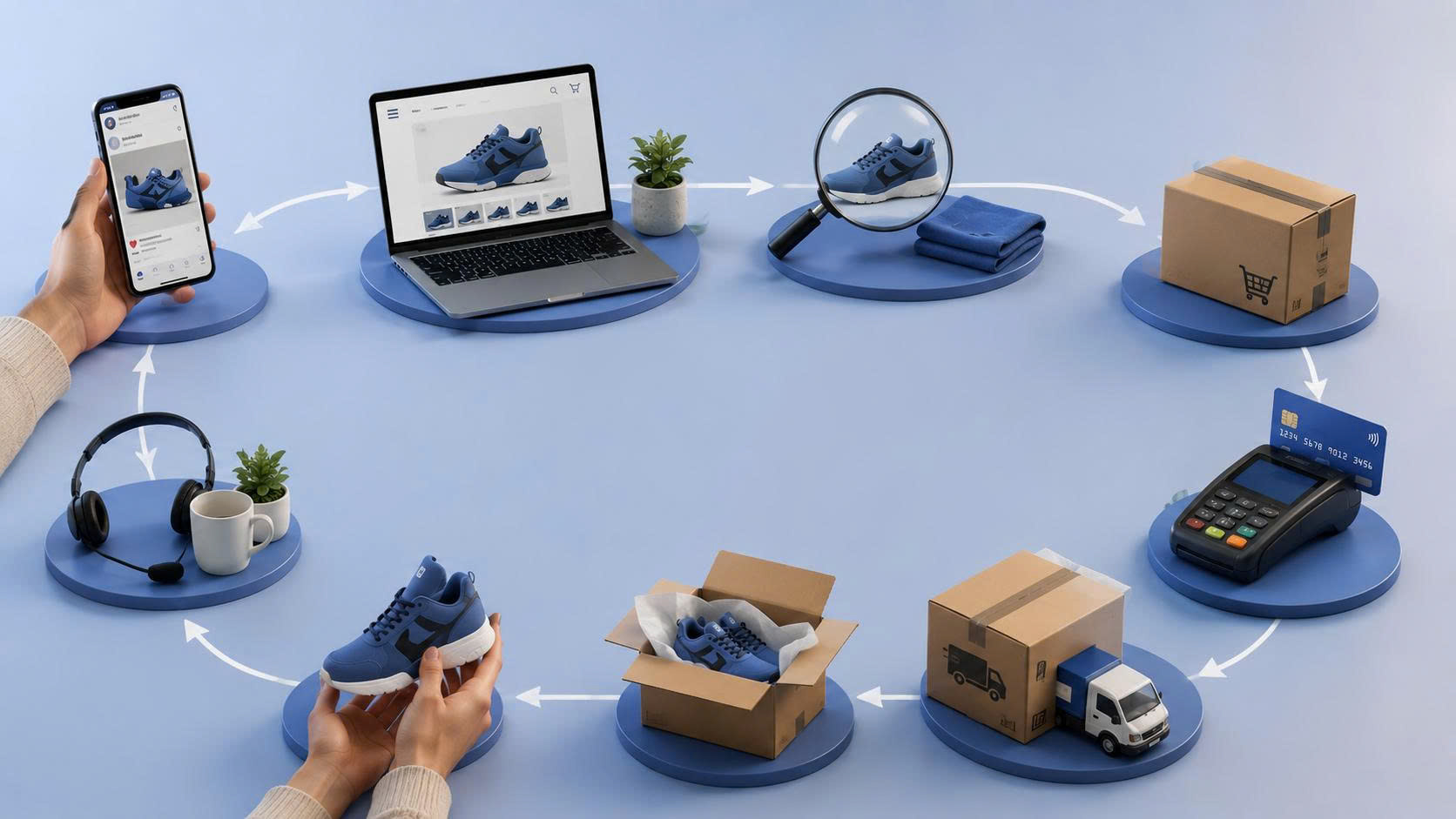
Consider the entire customer journey:
See an ad → Visit the website → Explore the product → Place an order → Make a payment → Receive the order → Use the product → Receive post-purchase support.
Every touchpoint can either strengthen or weaken brand equity.
For example, a professional website can still create a poor experience if the checkout process is complicated. Likewise, a high-quality product can still lead to customers leaving if delivery is slow or customer support is poor. Businesses should therefore regularly collect customer feedback and identify friction points throughout the customer journey.
6. Build Long-Term Customer Relationships
The ultimate goal of brand equity is not simply for customers to know the brand. It is for customers to trust it, choose it, and actively recommend it.
To build long-term relationships, businesses can:
- Personalize content.
- Provide useful information instead of constantly promoting products.
- Create customer loyalty programs.
- Encourage customers to share feedback.
- Build a community around the brand.
- Provide post-purchase support.
- Respond quickly and transparently when problems occur.
When customers feel heard and respected, their relationship with the brand becomes more than a simple buyer-seller transaction.
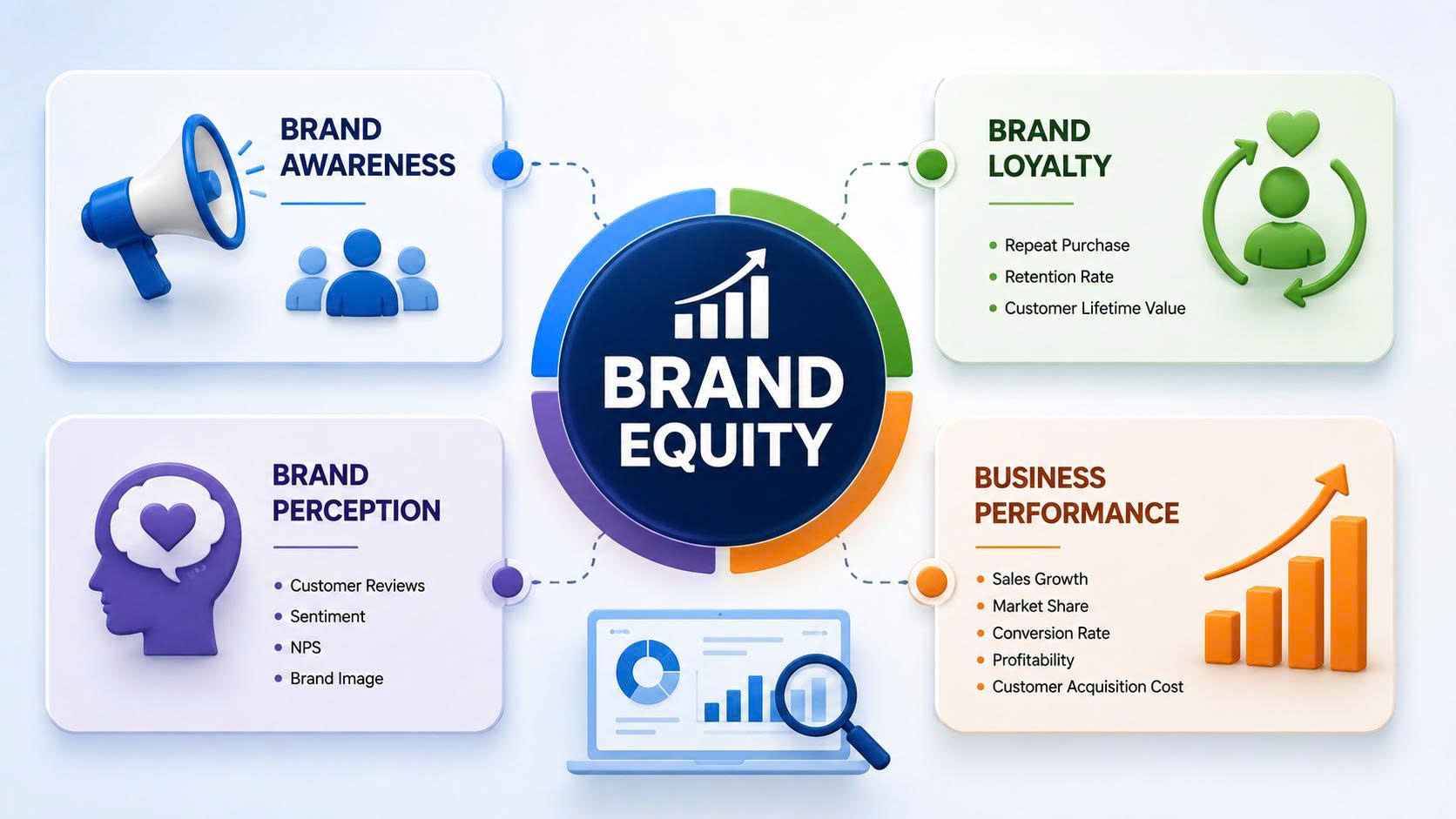
How to Measure Brand Equity
Brand equity is an intangible asset, so it cannot be evaluated through revenue alone.
Businesses can monitor several groups of metrics.
Brand Awareness
Track:
- Branded search volume.
- Direct traffic.
- Brand-name searches.
- Brand recognition through surveys.
- Social reach and mentions.
Brand Loyalty
Evaluate through:
- Repeat purchase rate.
- Customer retention rate.
- Customer lifetime value.
- Purchase frequency.
- Customer loyalty rate.
Brand Perception
Monitor:
- Customer reviews.
- Sentiment in customer feedback.
- Customer surveys.
- NPS.
- Brand attributes associated with the business.
Business Performance
Finally, evaluate whether brand equity is producing measurable business results through:
- Conversion rate.
- Average order value.
- Customer acquisition cost.
- Customer lifetime value.
- Repeat purchase rate.
- Ability to launch new products.
- Dependence on discounts.
A brand with strong equity is often better positioned to maintain business performance without relying constantly on promotions to generate sales.
Brand Equity Is Not Built Through Advertising Alone
A common mistake is to treat brand equity and brand awareness as the same thing. Advertising helps people see your brand. But being seen does not necessarily mean being trusted.
Building brand equity requires a combination of:
Awareness → Recognition → Positive Experience → Trust → Loyalty → Advocacy
Customers knowing who you are is only the first step. A positive experience is the next. When customers trust you and return to buy again, you begin building a strong foundation of brand equity. And when customers voluntarily recommend your brand to others, you have created an even more valuable brand asset.
Conclusion
Brand equity is one of the most important intangible assets a brand can build.
A strong brand is not simply recognized by customers. It is trusted, preferred, and remembered when customers make purchasing decisions.
To increase brand equity, businesses need to start with clear core values, develop memorable messaging, maintain a consistent brand identity, deliver quality products, optimize customer experience, and build long-term customer relationships.
Most importantly, brand equity cannot be created through a few advertising campaigns. It is built continuously through every product, every piece of content, every transaction, and every customer experience.
When a brand becomes a familiar and trusted name in the customer’s mind, the business gains more than the ability to sell its current products. It gains a foundation for launching new products, expanding into new markets, and achieving sustainable long-term growth.
EasyPay onBoard – Your success is our satisfaction