
PayPal is one of the oldest and most widely used international payment gateways in the world, especially popular among sellers targeting the US and EU markets. Thanks to its ease of use, global coverage, and cross-border payment support, PayPal is often the top choice for POD, dropshipping, and Ecommerce businesses.
However, as sellers expand and start operating multiple websites at the same time, a common question arises: Should you connect multiple websites to a single PayPal account?
The answer is not simply “yes” or “no.” It depends on your website niches, business model, and how well you manage payment risks. In this article, EasyPay onBoard will help you understand the risks, benefits, and safest ways to use PayPal for multiple websites.
Does PayPal Allow Multiple Websites?
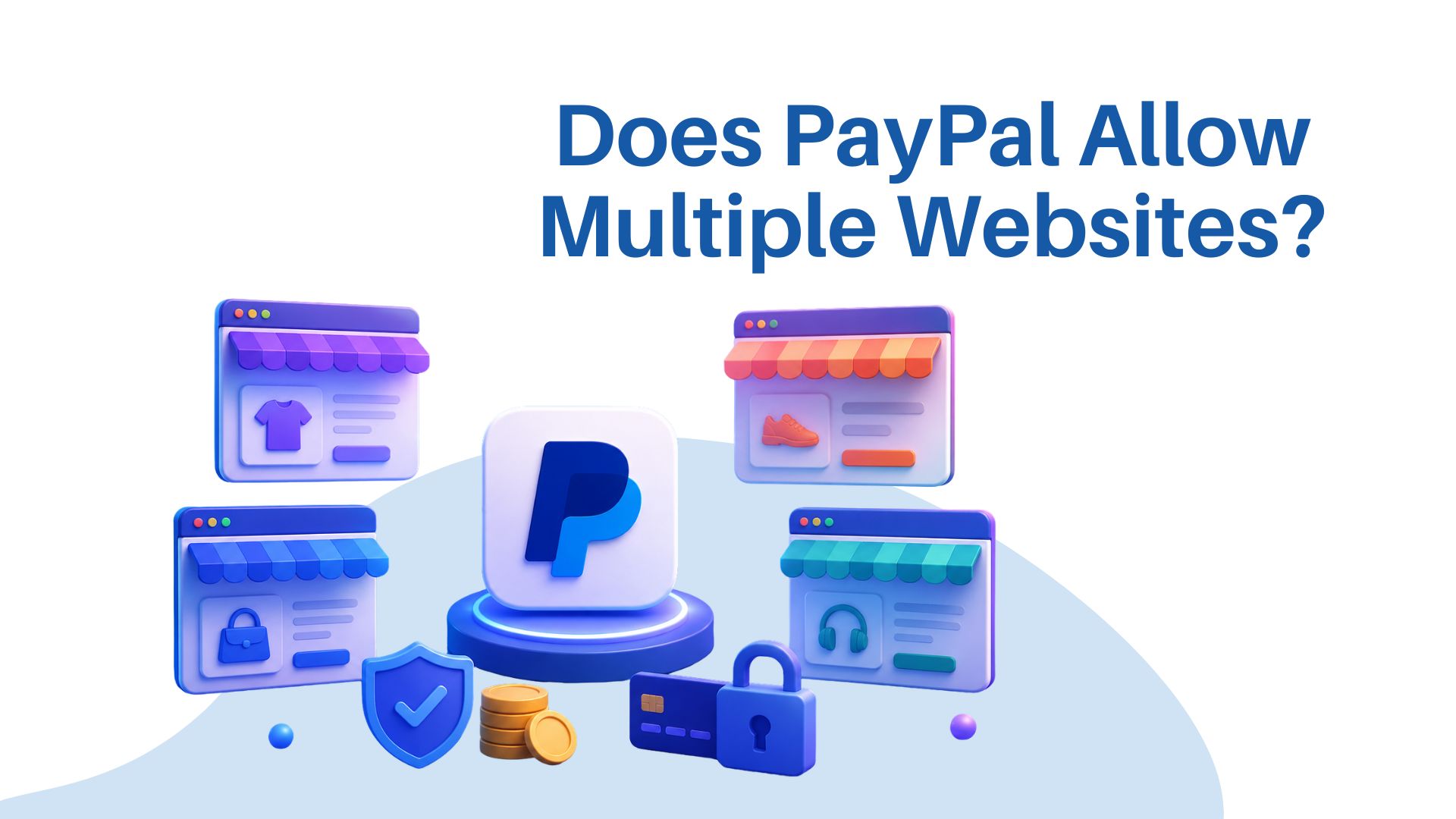
Technically, PayPal allows a single PayPal Business account to connect with multiple websites. You can use one PayPal account to receive payments from different domains, stores, or Ecommerce platforms.
However, PayPal is known for having a very strict risk control system sometimes even stricter than Stripe. When one PayPal account processes payments from multiple websites, the system closely monitors factors such as:
- Product and service categories
- Business industry
- Dispute, claim, and chargeback history
- Number of connected domains
- Unusual payment behavior
If PayPal detects risky activity, your account may face:
- Account limitation
- Funds being held for 21–180 days
- Continuous verification requests
- Permanent account suspension
Why You Should Carefully Consider Connecting Multiple Websites to One PayPal
Unlike Stripe, which focuses more on APIs and system behavior, PayPal tends to evaluate accounts based on overall activity. This means:
- One website with a high dispute rate can affect the entire PayPal account
- If the PayPal account gets limited, all connected websites stop receiving payments
- Exposing multiple domains from unrelated industries can quickly increase your risk score
This is why many legitimate sellers still experience sudden holds or limitations on their PayPal accounts.
When Is It Safe to Connect Multiple Websites to One PayPal?
Websites in the Same Niche or Industry
You should only connect multiple websites to one PayPal account if the websites share similar characteristics, such as:
- Same business niche
- Same product category (for example, all POD stores or fashion stores)
- Same target audience
- Not operating in industries considered high-risk by PayPal
Examples:
- Multiple POD apparel websites under different brands
- Fashion stores targeting the same market segment
In these cases, PayPal can easily recognize the business as a unified and legitimate operation, reducing the risk of negative reviews from the system.
When Should You Avoid Using One PayPal for Multiple Websites?
Websites from Different Industries or Business Models
You should avoid connecting unrelated websites to the same PayPal account, especially when:
- The websites operate in completely different industries
- Some products or services are considered high-risk
Examples:
- One POD apparel website
- One digital services website
- One supplement or weight-loss product website
Combining these types of businesses under one PayPal account can make PayPal suspicious of inconsistent or unclear business activities, which may lead to:
- Account limitations
- Long-term fund holds
- Constant verification and explanation requests
This is one of the most common mistakes that causes sellers to lose their PayPal accounts even when sales are performing well.
Risks of Connecting Multiple Websites to One PayPal
- One high-dispute website can impact the entire PayPal account
- If PayPal gets limited, all cash flow is frozen
- Difficult to control traffic sources and payment behavior
- Increased chances of repeated verification requests
For this reason, connecting multiple websites to one PayPal account should only be done when the seller fully understands PayPal’s risk management system.
Safer Solution: Use Cards Shield to Protect Your PayPal Gateway
To reduce risks when integrating multiple websites, many experienced sellers choose to use Cards Shield.
What Is Cards Shield?
Cards Shield is an intermediary system designed to:
- Hide the real domains from PayPal
- Distribute payment traffic more naturally
- Reduce the risk of PayPal detecting too many connected websites
What Does Cards Shield Support?
- Creates a protection layer between websites and PayPal
- Helps hide multiple domains
- Balances payment traffic distribution
- Manages multiple websites within the same niche
- Suitable for POD ecosystems with multiple brands
Example: If you own three POD apparel websites under different brand names, Cards Shield helps centralize payments into one PayPal account while maintaining better stability and long-term safety.
Advice From EasyPay onBoard
- Only connect multiple websites to one PayPal if they belong to the same industry
- Avoid mixing unrelated business models into a single PayPal account
- Closely monitor disputes and claims
- Regularly review connected domains
- Use payment gateway protection systems for more professional operations
PayPal Gateway Rental Service at EasyPay onBoard
Today, many sellers prefer renting PayPal gateways instead of creating accounts themselves in order to:
- Save time on verification
- Avoid early account limitations
- Access stable payment gateway systems
At EasyPay onBoard, PayPal gateway rental packages are designed for:
- POD sellers
- Dropshipping businesses
- Multi-website ecommerce ecosystems
Advantages
- Verified PayPal Business accounts
- Supports multiple websites within the same niche
- Compatible with Cards Shield integration
- Smart payment traffic distribution
- Reduced risks of holds and account limitations
Conclusion
Sellers can connect multiple websites to one PayPal account, but this should only be done when the websites belong to the same industry and are managed properly. Poorly planned website combinations are one of the leading reasons PayPal accounts get limited or funds are held for extended periods.
If you are operating multiple POD websites or planning to scale your Ecommerce ecosystem, investing in professional payment gateway management solutions is essential for long-term stability and sustainable growth.