If you have ever applied for Airwallex and had your application rejected, suspended, or fail KYB verification, the issue does not necessarily mean that your business is illegitimate.
Airwallex uses KYC/KYB, Risk Management, and Compliance processes to evaluate businesses both before and during their use of its services. When the system detects unclear, inconsistent, or potentially risky information, the application may be subject to additional verification or may not be approved.
Airwallex does not publicly disclose every risk factor used to evaluate individual accounts. However, there are several areas that sellers should pay particular attention to when preparing their application.
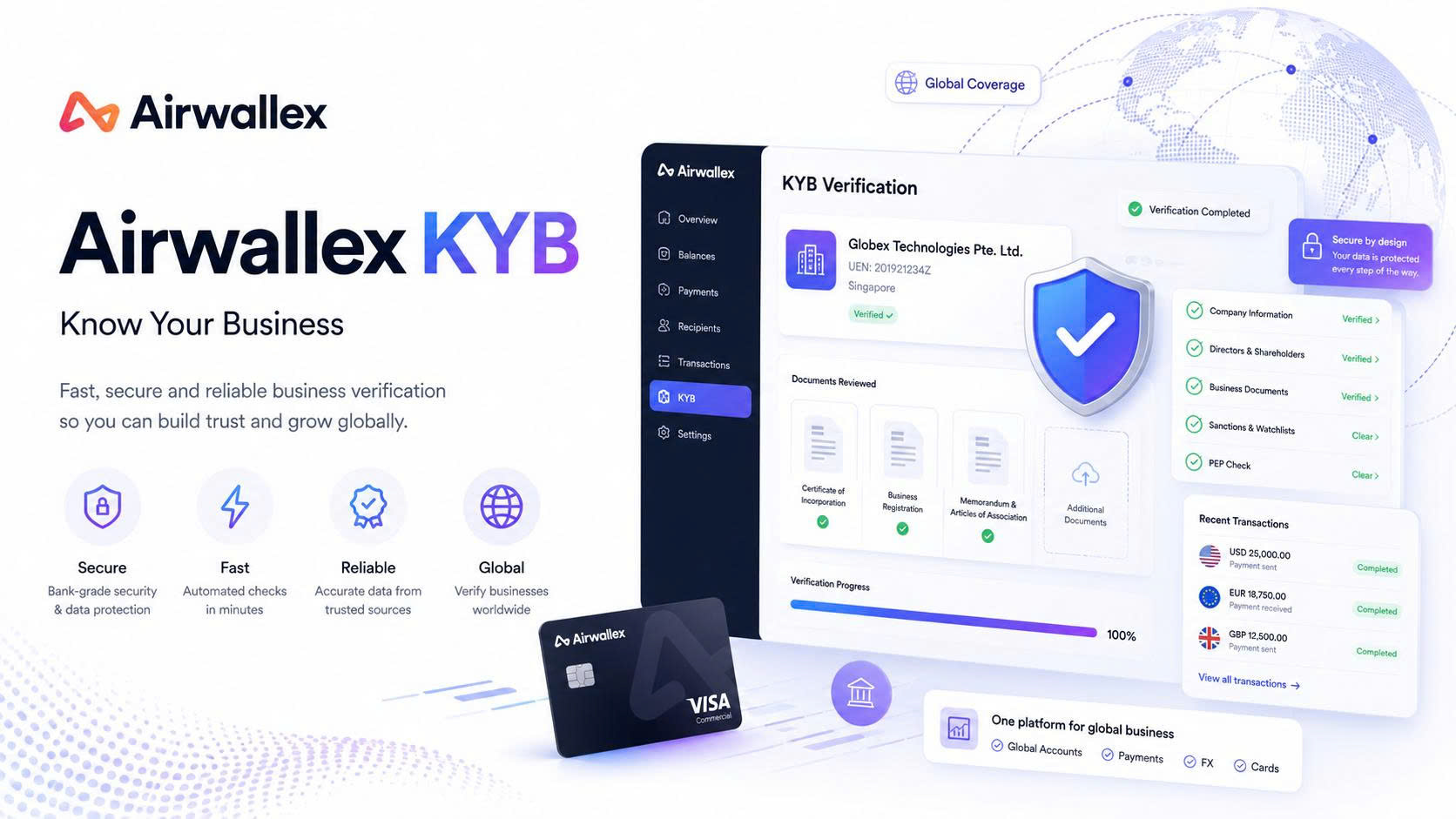
What Is Airwallex KYB?
KYB, or Know Your Business, is a business verification process used by financial institutions and fintech companies to verify the legitimacy and ownership of a business.
During the KYB process, Airwallex may review information such as:
- Legal company name and status
- Registered business address
- Ultimate Beneficial Owner (UBO)
- Directors or authorized representatives
- Website and business activities
- Industry and business model
- Source of funds and intended use of the service
- Documents proving business activity
The purpose of KYB is to determine whether the business actually exists, operates consistently with the information provided, and meets applicable compliance requirements.
Why Do Airwallex Applications Get Rejected or Fail KYB?
There are many factors that can affect the outcome of verification. In practice, the problem is often not a single piece of information but the overall business profile being unclear, incomplete, or inconsistent.
1. Inconsistent Business Information
Inconsistent information is one of the common reasons an application may require additional review.
For example, the Airwallex application may describe the company as an eCommerce business while the website presents a significantly different business activity.
Other examples include:
- Company name does not match across business documents and the website
- Business address is inconsistent
- Registration email is not clearly associated with the business
- Business activity description does not match the website
- UBO or director information is unclear
From a risk and compliance perspective, these inconsistencies may require additional verification. Before applying for Airwallex, businesses should review their website, legal documents, and application information to make sure everything is accurate and consistent.
2. The Company Is Too New or Has Limited Business Activity
A newly established LLC does not automatically mean the application will be rejected.
However, when a business is newly formed, has a recently created website, and has little visible evidence of actual business activity, it may be more difficult for the platform to understand and verify the business model.
Airwallex may need to understand:
- What products or services does the business sell?
- Who are its target customers?
- Where does its revenue come from?
- Is the website actively operating?
- Why does the business need Airwallex?
For new businesses, having a clear and realistic business model can help provide stronger context during verification.
3. A Poor or Incomplete Website
A business website can also play an important role in demonstrating business activity. A website with only a few product pages, limited contact information, or no clear explanation of what the business sells may make verification more difficult.
An eCommerce website should generally include essential information such as:
- Product or service descriptions
- Contact information
- Shipping policy
- Refund and return policy
- Terms & Conditions
- Privacy Policy
- Business information consistent with the application
The website does not need to be large or complicated. What matters is that the information is clear, credible, and consistent with the actual business.

4. High-Risk Industry or Business Model
Not every business model is evaluated in exactly the same way. Some industries may receive greater scrutiny because of potential fraud, chargeback, AML, or other compliance concerns.
Examples may include:
- Crypto-related businesses
- Forex
- Gambling
- Certain financial services
- Certain digital product businesses
- Certain eCommerce or dropshipping models with higher-risk characteristics
This does not mean every business in these categories will be rejected. However, additional information or documentation may be required to demonstrate the legitimacy and nature of the business.
5. Poor Response to an Airwallex RFI
During the KYB process, Airwallex may request additional information or documentation. This is commonly referred to as an RFI, or Request for Information.
The business may be asked to provide information about:
- Business model
- Revenue sources
- UBO
- Website
- Invoices
- Contracts
- Proof of business activity
A common mistake is providing incomplete answers or documents that do not directly address the request.
When responding to an RFI, businesses should carefully review what is being requested and provide accurate, complete, and verifiable information.
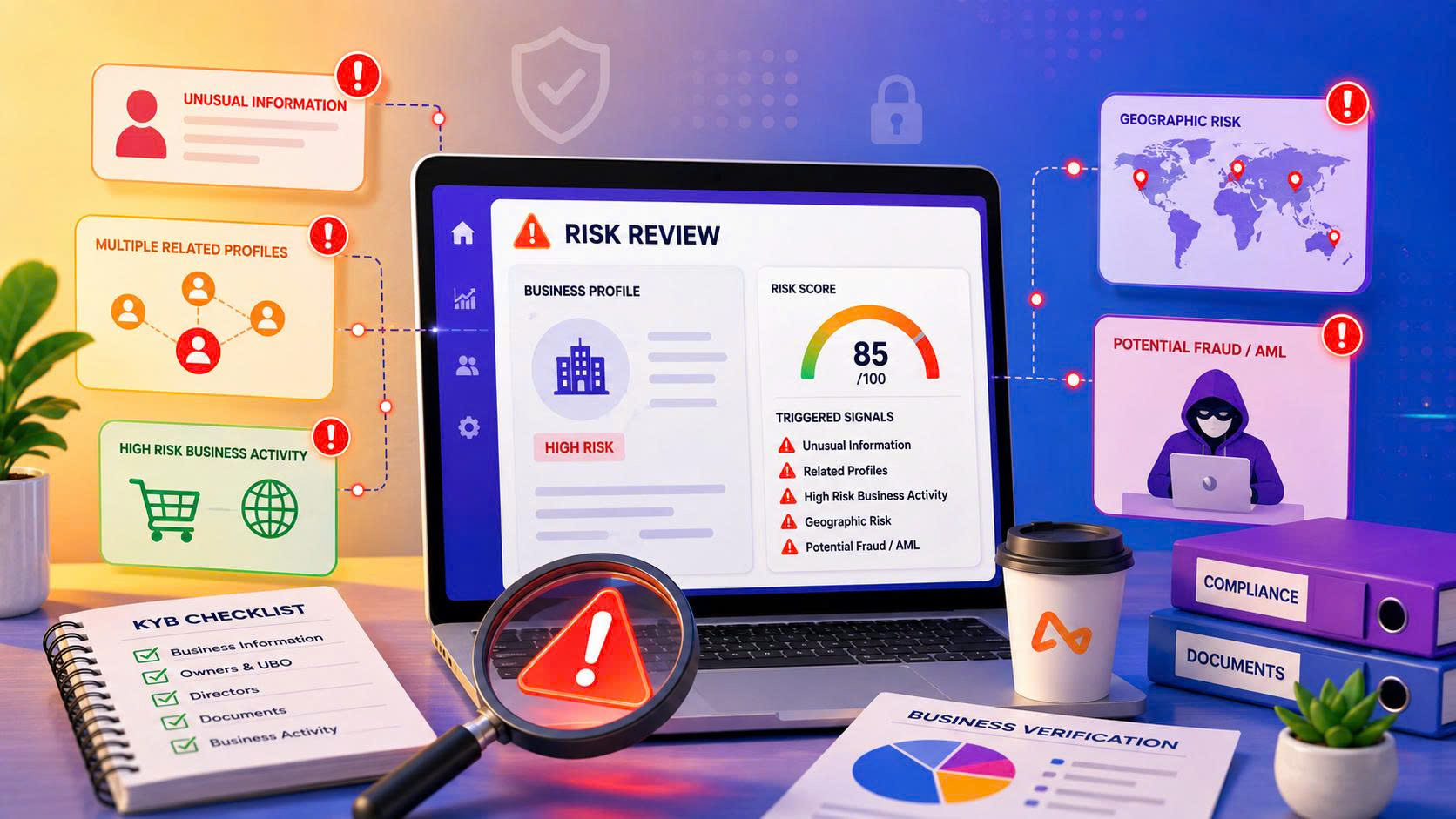
6. Risk Signals That Trigger Additional Review
In addition to business information, risk systems may evaluate multiple signals throughout the verification process.
These may include:
- Unusual registration information
- Potential connections between multiple business profiles
- Business activity that does not match the application
- Information that cannot be independently verified
- Signals potentially associated with fraud or AML concerns
A single risk signal does not necessarily mean an account will be rejected. However, multiple unusual signals may increase the likelihood of manual review or additional verification.
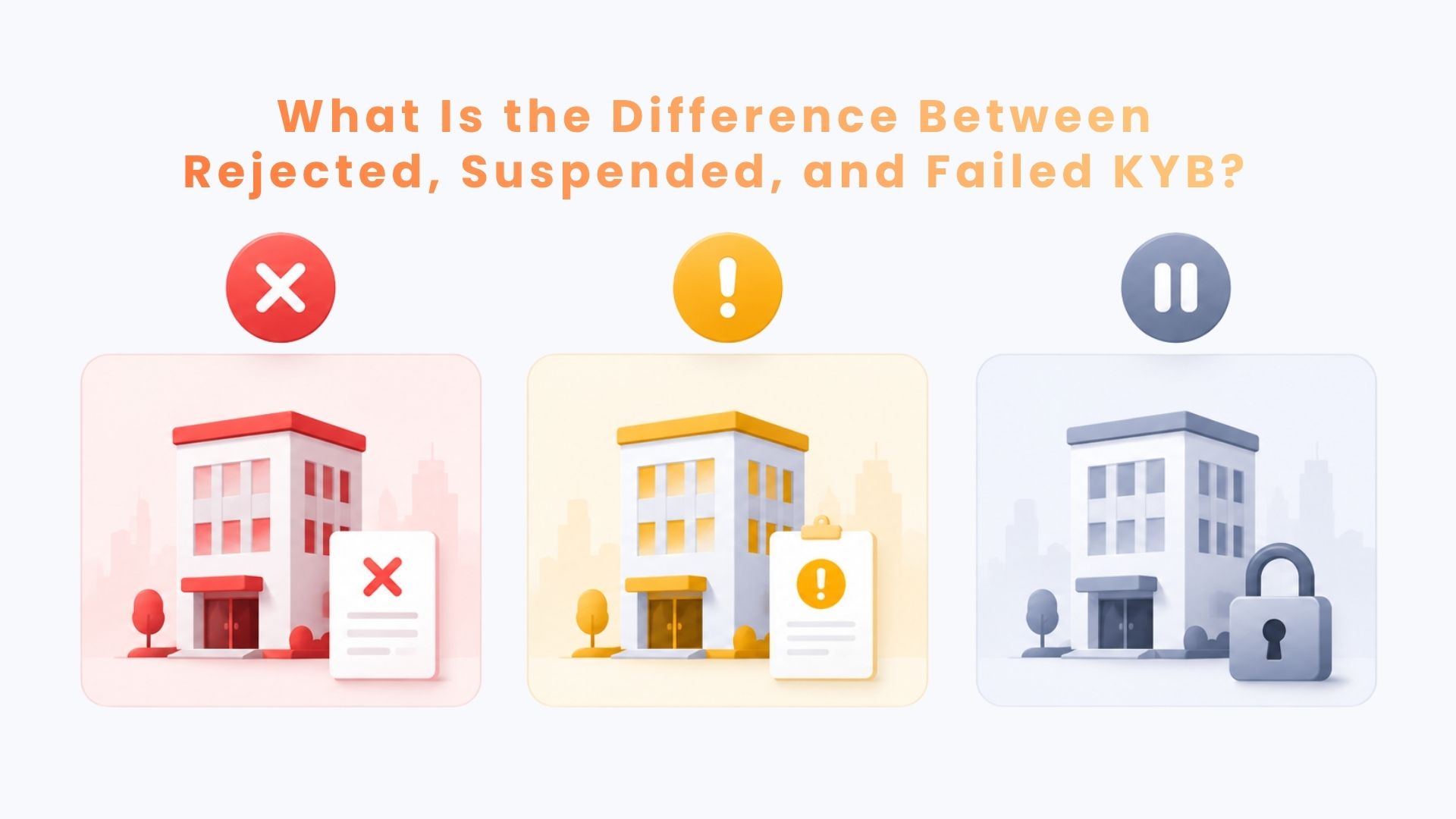
What Is the Difference Between Rejected, Suspended, and Failed KYB?
These three outcomes are not exactly the same.
Rejected
A rejection generally means that the application was not approved. The reason may relate to eligibility, risk assessment, business information, or verification results.
Failed KYB
Failing KYB generally relates to difficulties verifying the business or its ownership.
For example, the information provided may not be sufficiently verifiable, or additional documentation may have been requested but the requirements were still not satisfied.
Suspended
A suspension generally occurs when an account has already been created or is operating but is later restricted due to risk, compliance, verification, or transaction-related concerns. Therefore, initial approval does not necessarily mean the account will never be reviewed again.
How to Improve Your Chances of Passing Airwallex KYB
There is no way to guarantee approval. However, businesses can reduce avoidable verification issues by preparing their profile properly before submitting an application.
1. Review All Business Information Before Submission
Check that the following information is consistent:
- Legal name
- Business address
- Owner information
- Company registration details
- Website
- Business activity
- Industry
- Contact information
The goal is to eliminate unnecessary inconsistencies before submitting the application.
2. Build a Complete Website
Your website should clearly explain what the business does and provide the information customers would reasonably expect to find.
For an eCommerce business, consider including:
- Product pages
- Contact information
- Shipping policy
- Refund and return policy
- Privacy Policy
- Terms & Conditions
3. Describe the Business Model Accurately
Avoid overly broad descriptions such as “eCommerce” or “online business.” Instead, clearly explain what you sell, who your customers are, how you generate revenue, how orders are fulfilled, and why you intend to use Airwallex.
4. Prepare Verifiable Documents
Documents provided during KYB should:
- Be valid and up to date
- Match the legal entity
- Be clear and readable
- Not contain inaccurate alterations
- Directly correspond to the verification request
5. Avoid Submitting Multiple Applications Without Understanding the Issue
If an application is rejected or placed under review, repeatedly creating new applications with similar information is not necessarily the right solution. A better approach is to understand the reason for the rejection, review eligibility requirements, and address any verification issues before submitting another application.
Airwallex KYB Pre-Application Checklist
Before applying, businesses can review the following:
-
Valid legal entity with accurate information
-
Clear ownership information
-
Verifiable business address
-
Functional business website
-
Website accurately reflects the business model
-
Products or services are clearly described
-
Appropriate website policies are available
-
Business information is consistent across different sources
-
Valid KYB documents are available
-
Business model is compatible with the intended service
-
Source of funds or income can be explained
-
Expected transaction activity is consistent with the business model
Conclusion
Being rejected, suspended, or failing Airwallex KYB does not necessarily mean that a business is illegitimate. In many cases, the issue may be that the platform cannot sufficiently verify the business or has identified factors that require additional review.
The key to a stronger Airwallex application is building a clear, legitimate, and consistent business profile.
Do not focus only on having an LLC or completing the application form. Look at the entire business profile from a compliance perspective:
Who is the business? What does it sell? Who owns it? Does the website match the application? Where does the money come from? And are all of these details consistent with each other?
When these questions can be answered clearly and supported with verifiable information, the business will have a more complete KYB profile and can reduce avoidable verification issues.
EasyPay onBoard – Your success is our satisfaction