
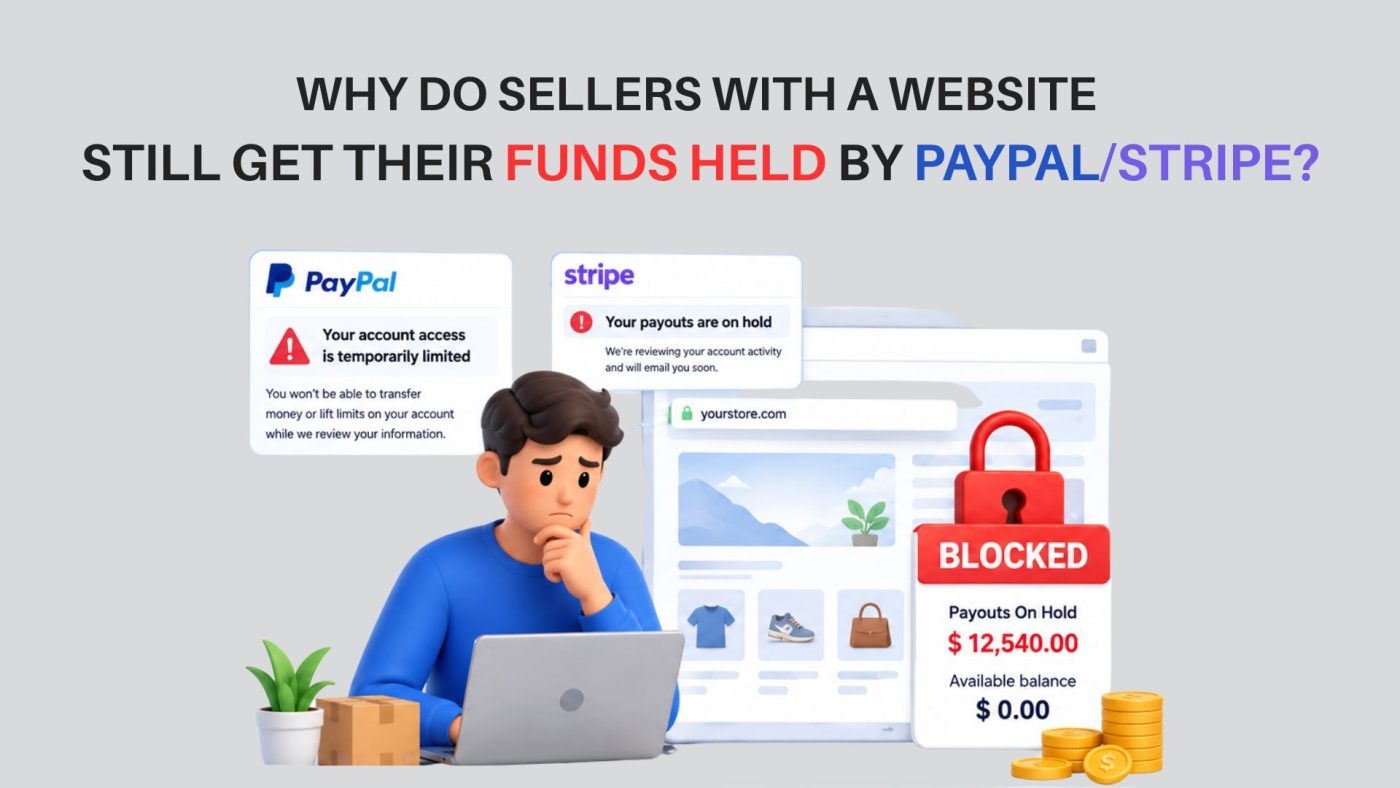
Many sellers believe that “having their own website makes PayPal or Stripe safer and less likely to have their funds held.”
The reality is quite the opposite.
According to real-world data from EasyPay OnBoard, most cases of PayPal/Stripe funds being held or blocked come from sellers who already have websites, even well-invested ones.
The reason is that PayPal and Stripe don’t assess risk based on the website itself, but rather on their data systems regarding cash flow, payment behavior, and risk history.
How Do PayPal and Stripe Assess Risk?
1. A Website Is Only a Secondary Factor
A website helps verify that your business has an online presence, but it does not prove:
- Business stability
- Payment reliability
- Fraud risk level
- Long-term operational legitimacy
As a result, simply having a website does not automatically make your payment account trustworthy in the eyes of PayPal or Stripe.
2. Cash Flow Is the Key Factor
PayPal and Stripe place much greater emphasis on analyzing:
- Where payments originate
- The speed at which funds are received
- Revenue growth patterns over time
Some common high-risk indicators include:
- Sudden spikes in sales volume
- Traffic coming from multiple high-risk countries
- Lack of a consistent transaction history
Even a single unusual sales surge can trigger an automated account review.
3. Customer Payment Behavior Matters
Payment processors closely monitor:
- Failed payment rates
- Multiple payment retry attempts
- Refund rates
- Chargeback rates
MMO sellers often face additional risks because of:
- Constant ad testing campaigns
- Customers with insufficient funds
- Bank-declined transactions
- Cross-border payments
These factors can quickly increase an account’s risk score.
Common Reasons MMO Sellers Get Blocked Despite Having a Website
1. Mismatch Between Declared and Actual Business Activities
This is one of the most serious mistakes.
For example, a seller may declare:
- Digital services
- Online consulting
- Software solutions
But actually sell:
- MMO tools
- Online accounts
- Intermediary services
- Shared subscriptions
PayPal and Stripe often classify this as business misrepresentation, which can result in:
- Long-term fund holds
- Permanent account limitations
- No appeal opportunities
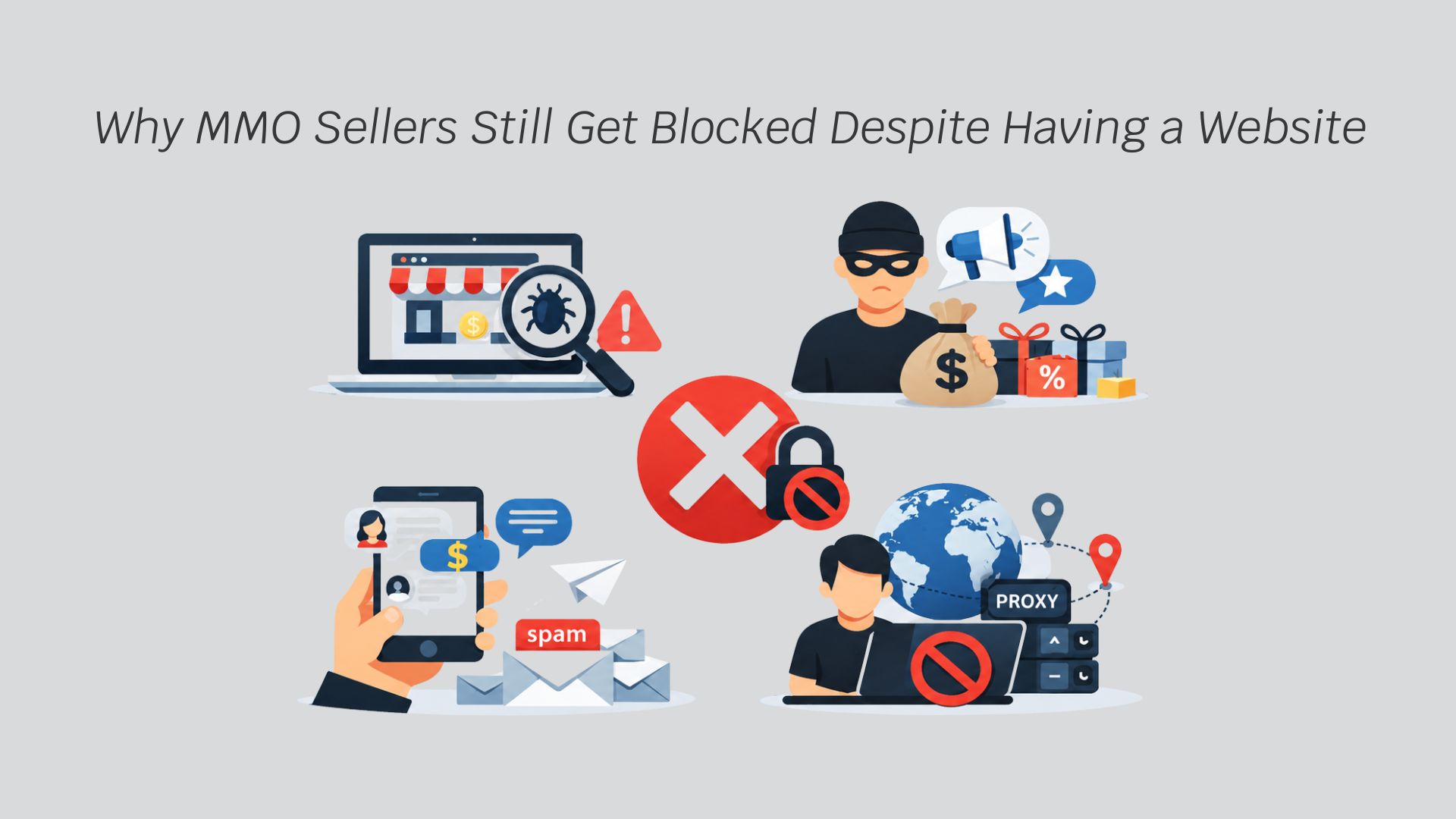
2. New Website With High Revenue
Many websites have:
- Newly registered domains
- Little operational history
- No established legal footprint
Yet they suddenly generate:
- Significant revenue
- Rapid order growth
- Unstable traffic patterns
This frequently leads to:
- Fund holds lasting 21–180 days
- Requests for documents that many MMO sellers cannot provide
3. Using Personal Information for an MMO Business
Many sellers operate with:
- Personal names
- Personal bank accounts
- No registered business entity
While running a business model that functions as a service provider or intermediary.
This can cause the account to be viewed as:
- Legally weak
- Operationally inconsistent
- Higher risk during disputes
Common Misconceptions About PayPal and Stripe
Misconception 1: Stripe Is Safer Than PayPal
Stripe often applies even stricter risk controls than PayPal, especially for:
- International sellers
- Digital services
- Cross-border business models
Many Stripe accounts are closed with little or no opportunity for appeal.
Misconception 2: Fund Holds Happen Because of Bad Luck
Fund holds are not random.
They occur when an account’s risk score exceeds the platform’s acceptable threshold.
Misconception 3: A Beautiful Website Is Enough
Website design has very little influence on whether an account will be reviewed, limited, or blocked.
Risk management systems focus on financial behavior rather than visual appearance.

Why Do Sellers Only Look for Solutions After Being Blocked?
In most cases:
- Funds have already been frozen
- The account has already been labeled high risk
- The chance of removing the hold is very low
Many sellers end up learning the lesson only after experiencing significant cash-flow problems. That is why prevention is almost always less expensive than dealing with the consequences.
Practical Solutions for MMO Sellers
Choose the Right Payment Gateway
Not every MMO business model is suitable for:
- PayPal
- Stripe
Choosing the wrong payment processor from the beginning can significantly increase your risk exposure.
Use Verified Payment Solutions
This is one reason why many sellers choose to rent payment gateways through EasyPay OnBoard.
Benefits may include:
- Accounts that have already passed the highest-risk startup phase
- Established transaction history
- Experience handling payment reviews and compliance requests
Potential advantages include:
- Reduced risk of fund holds
- More stable cash flow
- Easier business scaling compared to brand-new accounts
Conclusion
Having a website does not guarantee that PayPal or Stripe will consider your business low risk. In reality, a website is only a small part of the evaluation process. What PayPal and Stripe care about most are transaction patterns, payment behavior, business consistency, and overall risk exposure.
For MMO sellers looking to protect their cash flow while scaling their business, choosing the right payment infrastructure and implementing proper risk management strategies from the start is far more important than simply having a website.
EasyPay onBoard – Your success is our satisfaction