
In online business, one of the biggest risks when using PayPal is getting funds held, accounts reviewed, or even permanently limited. Many people believe these actions happen randomly, but in reality, PayPal operates using a highly sophisticated risk evaluation system called Risk Scoring.
In this article, EasyPay onBoard explains how PayPal Risk Scoring works and how sellers can optimize their business behavior to reduce risk.
What Is PayPal Risk Scoring?
Risk Scoring is an automated risk assessment system powered by AI and Machine Learning that evaluates:
- Every transaction
- Every account
- Overall business behavior
The system works in real time. If the risk score exceeds a certain threshold, PayPal may:
- Place a payment hold
- Trigger an account review
- Limit or permanently restrict the account
Simply put:
- PayPal does not judge who you are.
- PayPal evaluates whether your behavior resembles fraudulent activity.

How PayPal Risk Scoring Works
1. Continuous Behavioral Data Collection
PayPal analyzes multiple categories of data simultaneously to determine how safe an account is.
Transaction Data
- Order value
- Transaction frequency
- Revenue growth speed
- Buyer’s country
- Device and payment method
Account Data
- Account age
- Refund and dispute history
- Successful transaction rate
- Verification status
- Business category
Fulfillment Data
- Whether valid tracking is provided
- Shipping and processing speed
- Percentage of undelivered orders
- Customer complaints and disputes
Unusual Behavioral Signals
- Logins from unfamiliar IP addresses
- Sudden device changes
- Sudden business model changes
- Abnormal transaction volume spikes
2. Comparing Behavior Against Fraud Models
After collecting the data, PayPal’s AI system compares your activity against:
- Millions of accounts across the network
- Previously detected fraud patterns
- Statistical risk models
If your behavior resembles known fraud patterns, your risk score increases.
Examples of risky signals include:
- Sudden revenue spikes within a short period
- Most orders coming from high-fraud countries
- Invalid or non-updating tracking information
3. Calculating the Overall Risk Score
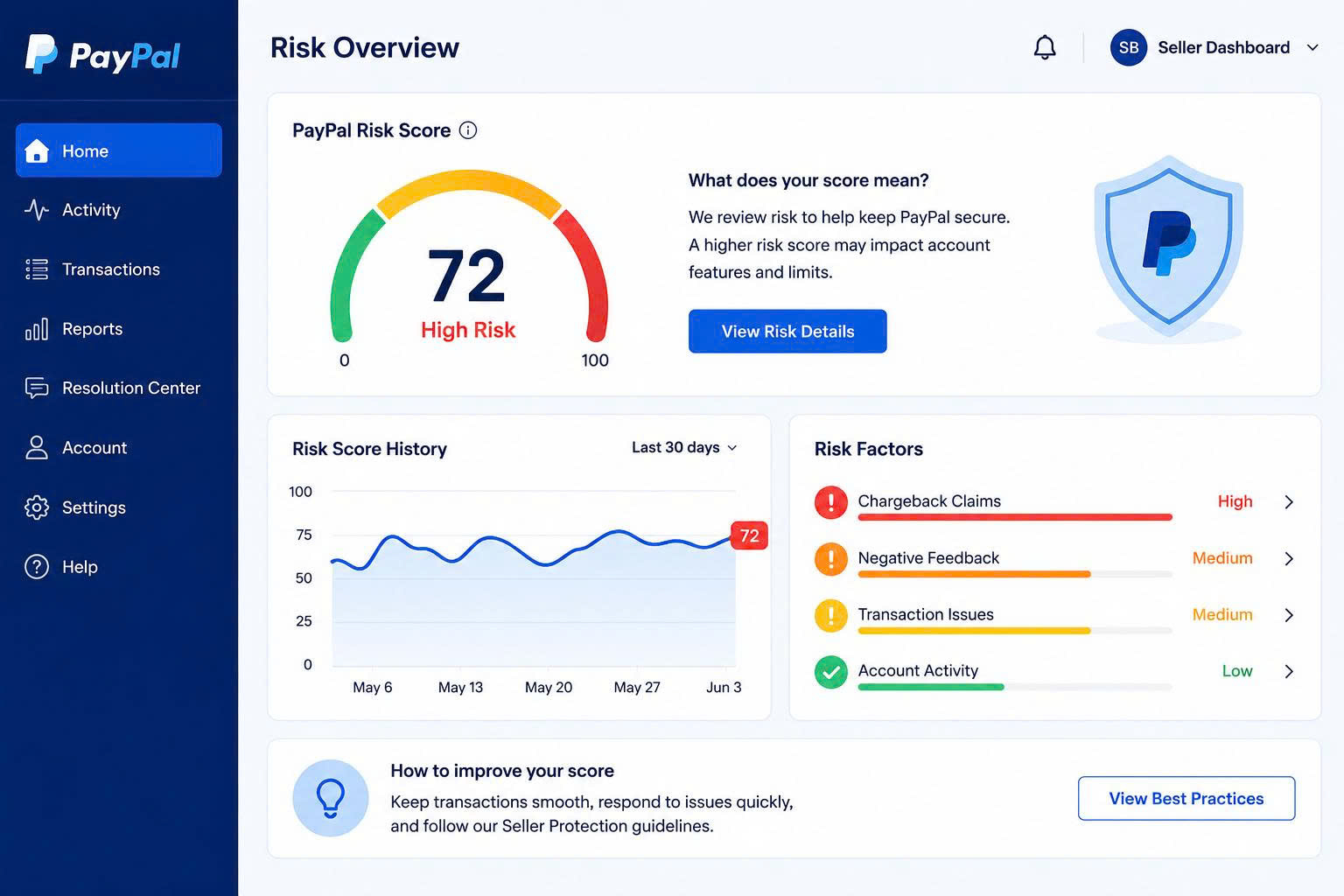
Each signal carries a different weight.
For example:
- High chargeback or dispute rates: very high weight
- Rapid revenue growth: high weight
- Newly created accounts: medium weight
The system combines all data points to generate an overall Risk Score.
An important detail is that PayPal does not evaluate risk based only on individual transactions. The system also tracks long-term behavioral trends.
If over time you consistently:
- Ship orders slowly
- Experience increasing refund rates
- Show unstable revenue fluctuations
then the accumulated risk score will continue rising until PayPal eventually takes action.
Factors That Quickly Increase Risk Score
In real-world ecommerce operations, common risk triggers include:
- Sudden spikes in revenue
- Increasing chargeback or dispute rates
- Failure to provide valid tracking
- High refund ratios
- Selling in high-risk industries
- Large numbers of buyers from high-fraud regions
- New accounts processing large transaction volumes
Factors That Help Lower Risk Score
On the other hand, PayPal favors accounts with stable and trustworthy behavior.
Positive signals include:
- Consistent transaction history with gradual growth
- Fast order processing and fulfillment
- Valid and regularly updated tracking information
- Low dispute and refund rates
- Fully verified accounts
- Satisfied customers with minimal complaints
Conclusion
PayPal Risk Scoring is a data-driven system that evaluates long-term behavioral patterns rather than random factors.
In most cases, payment holds, account reviews, or limitations are caused by:
- Sudden business growth
- Unstable operations
- High dispute or refund rates
To maintain a safer and more sustainable PayPal account, sellers should:
- Scale gradually
- Fulfill orders quickly
- Provide valid tracking information
- Keep refund and dispute rates under control
When business behavior remains stable, transparent, and consistent, the account’s Risk Score improves significantly, reducing the likelihood of restrictions or limitations.