
What Are Stripe Radar and Stripe Prevent?
Payment security is one of the most important factors when running an ecommerce website, SaaS platform, or online marketplace. To help businesses reduce fraud risks, Stripe offers two security solutions: Stripe Radar and Stripe Prevent. Although both are designed to combat fraud, they protect your business at different stages of the customer journey. Understanding the differences between these tools will help you choose the right solution and maximize your platform’s security.

What Is Stripe Radar?
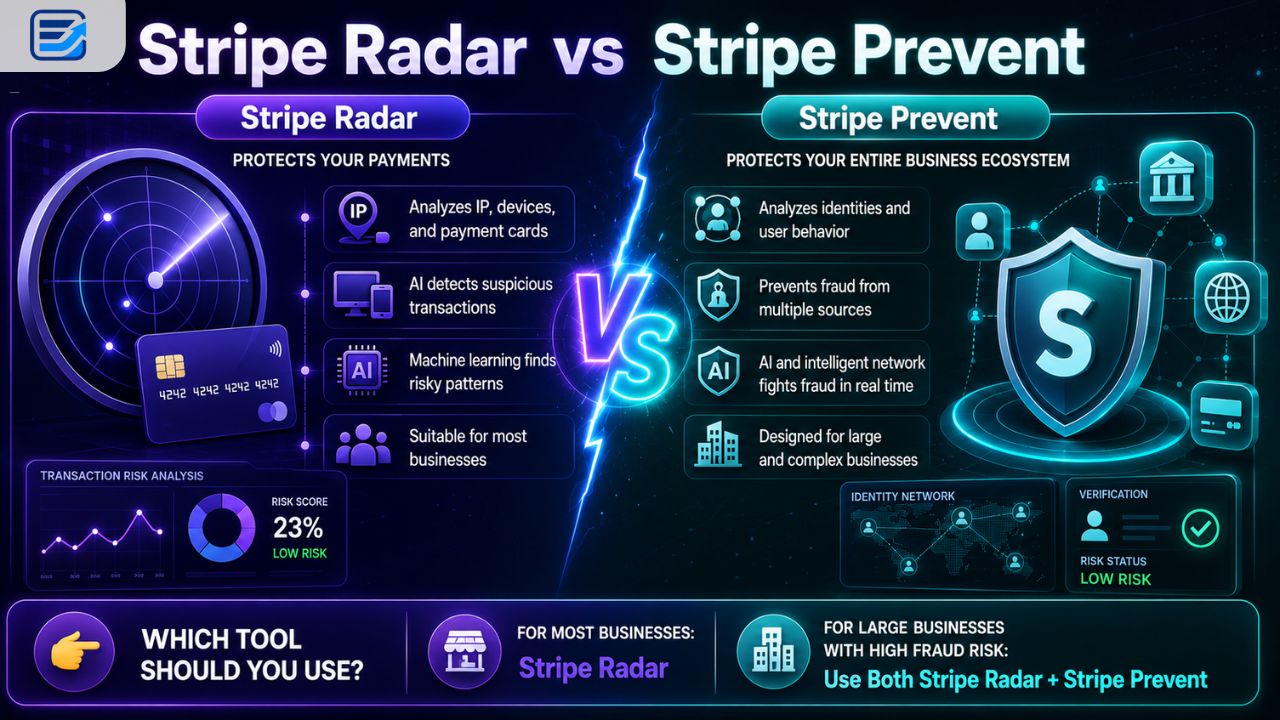
Stripe Radar is Stripe’s fraud prevention system for payment transactions. It uses artificial intelligence (AI) and data from millions of transactions worldwide to analyze various signals, including IP addresses, devices, payment card details, geographic locations, and customer behavior. Based on these signals, Radar evaluates the risk level of each transaction in real time.
When a transaction appears suspicious, Stripe Radar can automatically block the payment or require the customer to complete 3D Secure authentication before the transaction is approved. This helps businesses reduce credit card fraud, minimize chargebacks, and protect revenue.

What Is Stripe Prevent?
Unlike Radar, Stripe Prevent goes beyond payment protection by securing your platform before a payment even occurs. It is designed to detect fraudulent activities such as fake account creation, bot registrations, coupon abuse, free trial abuse, and other forms of account fraud that exploit your platform’s resources.
By stopping these threats at an early stage, Stripe Prevent helps reduce system abuse, lower unnecessary marketing costs, and protect the experience of legitimate users.
Stripe Radar vs. Stripe Prevent: Key Differences
Although both are Stripe fraud prevention solutions, Radar and Prevent serve different purposes. Stripe Radar focuses on protecting payment transactions by analyzing and assessing the risk of each payment attempt. Stripe Prevent, on the other hand, protects your platform by identifying and blocking fraudulent accounts and abusive behavior before users even reach the payment stage.
Simply put, Stripe Radar protects your revenue, while Stripe Prevent protects your platform and user ecosystem.

Which Businesses Should Use Stripe Radar?
For most Shopify stores, ecommerce websites, and online retailers, Stripe Radar is typically sufficient to protect against payment fraud. It significantly reduces fraudulent transactions without requiring additional complex security solutions.
If your business mainly processes online payments and does not offer features such as mass account registration, free trials, or multi-user platforms, Stripe Radar is often the most practical and cost-effective choice.
When Should You Use Both Stripe Radar and Stripe Prevent?
For SaaS companies, online marketplaces, subscription-based businesses, and platforms offering free trials, combining Stripe Radar with Stripe Prevent provides more comprehensive fraud protection.
While Radar focuses on preventing fraudulent payment transactions, Prevent detects bots, fake accounts, and platform abuse during the registration stage. Together, these two solutions help businesses reduce fraud risks, lower operational costs, and deliver a better experience for legitimate customers.
Conclusion
Stripe Radar and Stripe Prevent are not competing products—they are complementary layers of protection. Radar safeguards your payment transactions, while Prevent secures your platform against fraudulent activities before payments even take place. Whether you need one or both depends on your business model and the types of fraud risks your company faces.
EasyPay onBoard – Your success is our satisfaction