
As ECommerce sellers scale their operations, it is quite common to own multiple Shopify stores under a single LLC. Each store might serve a different brand, product category, or market.
However, issues can arise when a store undergoes a payment review.
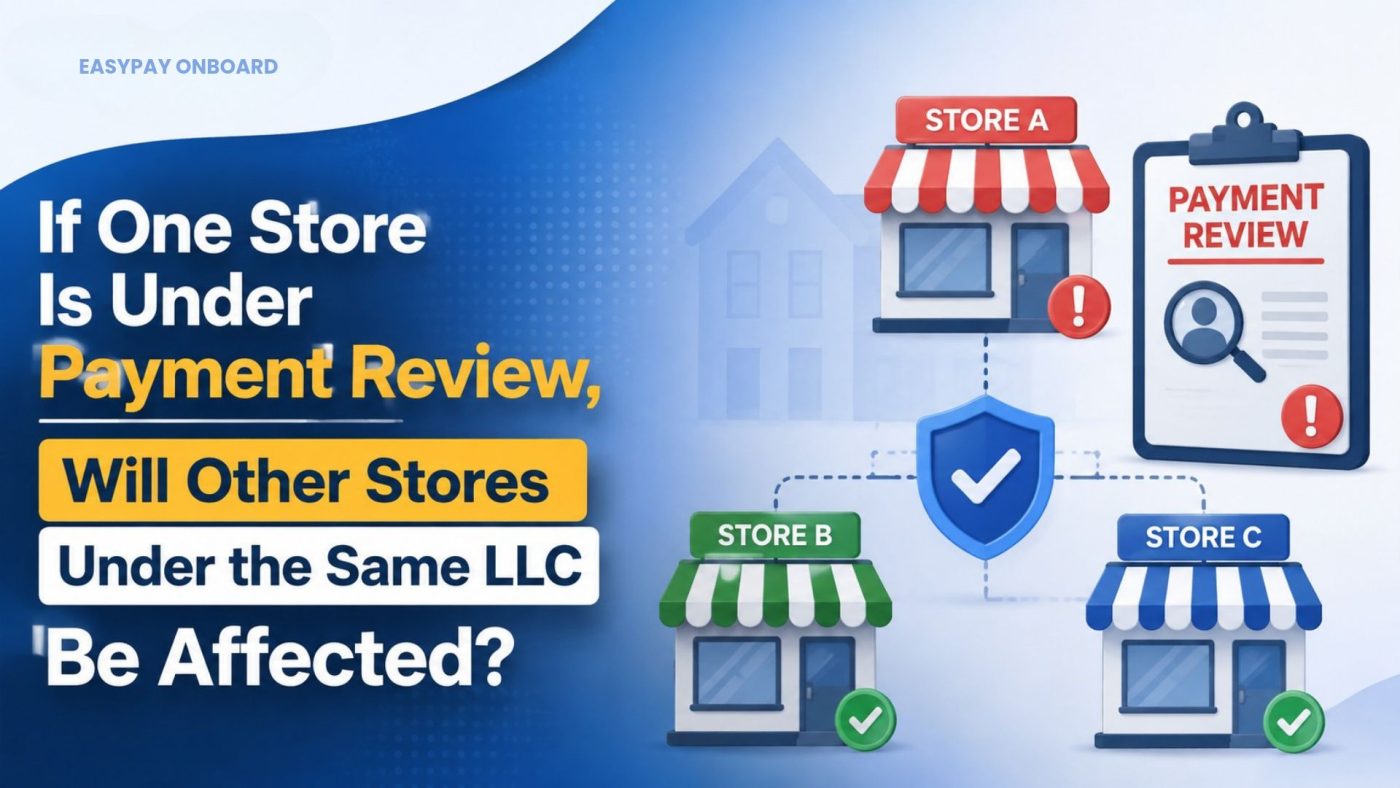
For instance, suppose you operate three Shopify stores under one LLC. If Store A faces problems such as chargebacks, refund issues, or shipping disputes—and is subsequently flagged for review by the payment provider, a critical question arises:
Will Store B and Store C be affected?
The answer is: Possibly, but not necessarily.
A review of one store does not automatically mean that all stores under the same LLC will be immediately locked. However, payment providers may examine the connections between stores if they detect related risk signals or shared information. Therefore, when operating multiple stores, sellers must look beyond the sheer number of stores and understand how payment setups and risks are evaluated.
What Is a Payment Review?
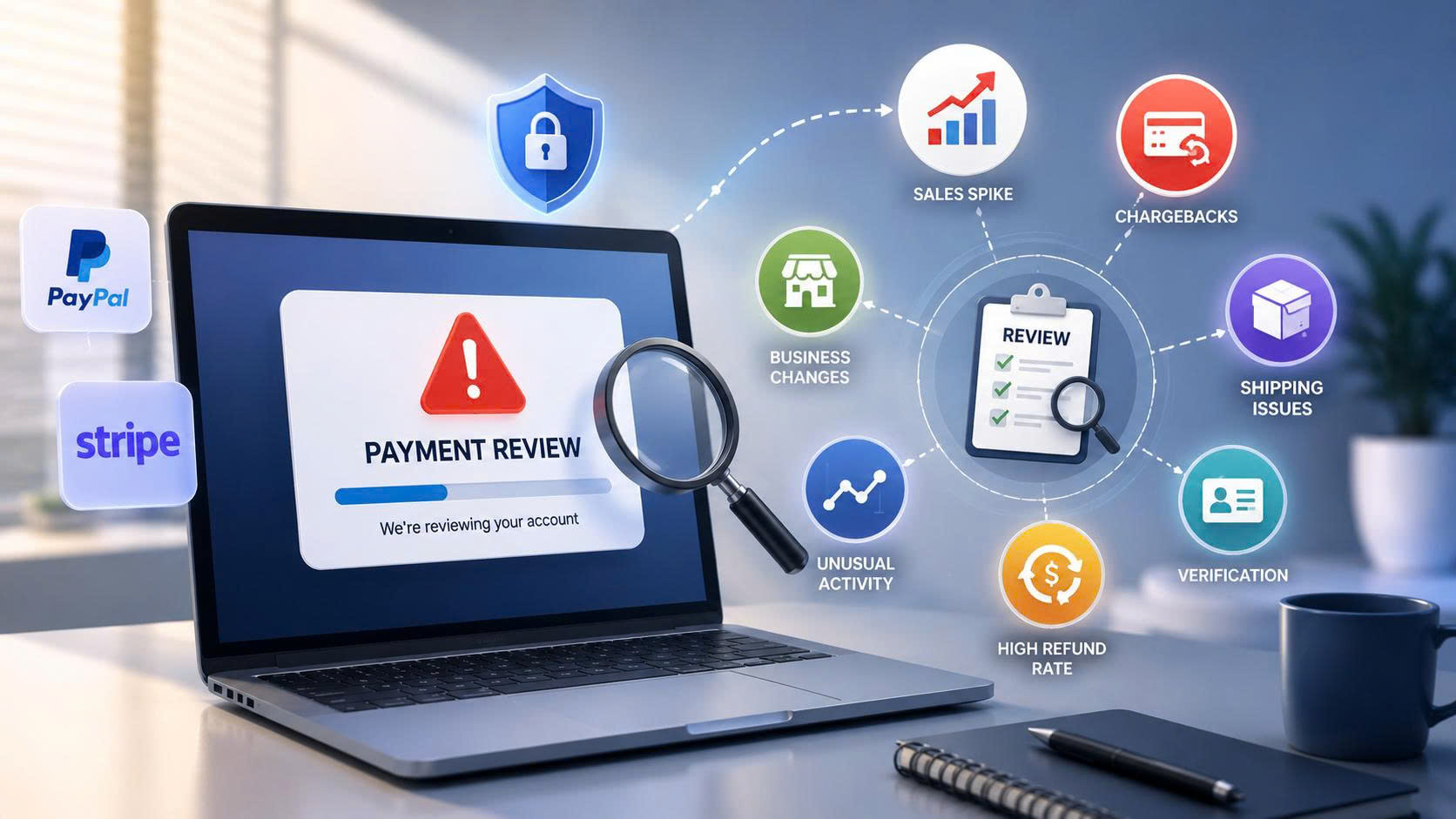
Payment Review is the process in which a Payment Provider reviews an account, transactions, or business activity when its system detects factors that require additional verification. Platforms such as PayPal and Stripe use Risk Management systems to evaluate transactions and seller activity.
Some factors that may trigger a review include:
- Sudden revenue growth.
- Rapid increases in transaction value.
- Increased Chargebacks or Disputes.
- High Refund Rate.
- Slow Shipping or missing Tracking.
- Significant changes in products or Business Model.
- Business information requiring verification.
- Unusual transaction activity.
- Actual business activity not matching the information provided.
Importantly, a Payment Review does not necessarily mean that the seller has violated a policy. In many cases, it is simply a Risk and Compliance check to verify the business activity further.
One LLC Operating Multiple Shopify Stores: What Happens?
Let’s look at a practical example.
You have:
- 1 LLC
- 3 Shopify Stores
- 3 different product categories
- Stable revenue across all Stores
After scaling, Store A grows very quickly. Revenue increases significantly within a short period, while Chargeback and Refund Rates also begin to rise. The Payment Provider detects these changes and starts reviewing Store A. This does not mean Store B and Store C will immediately be suspended. However, the Payment Provider may also review information related to the Business, Owner, Payment Account, transactions, and other relevant factors if necessary.
This is an important point for sellers to understand: Payment Providers do not necessarily look at only one Store in isolation.
What Factors Can a Payment Provider Evaluate?
1. Business Information
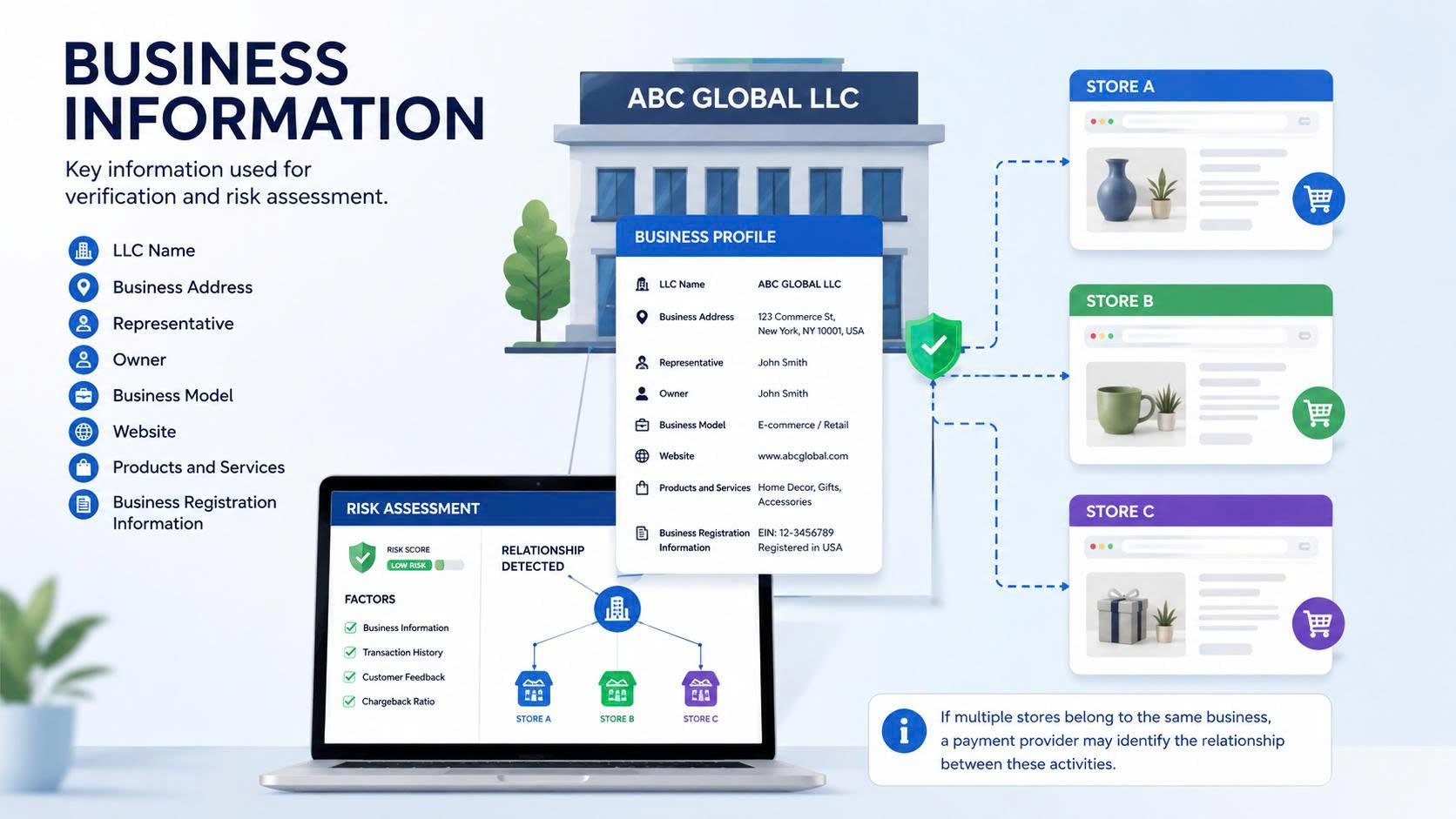
Business Information is an important category of data during Verification and Risk Assessment.
This may include:
- LLC name.
- Business address.
- Representative.
- Owner.
- Business Model.
- Website.
- Products and services.
- Business registration information.
If multiple Stores belong to the same business, a Payment Provider may identify the relationship between these activities.
2. Owner and the Relationship Between Stores
An LLC can operate multiple Brands or Websites. However, having different Brand names does not necessarily mean that the Stores are completely independent businesses.
A Payment Provider may evaluate information related to the Business and Payment Accounts to assess the overall business activity.
Therefore, the mindset of: “Store A has a problem, so I can simply move to Store B.” does not always work.
3. Transaction Pattern
Payment Providers do not only look at individual transactions.
Risk systems may analyze changes in transaction activity, such as:
- Number of transactions.
- Order value.
- Transaction frequency.
- Revenue over time.
- Failed transaction rate.
- Customer countries.
- Unusual transactions.
For example, a Store generates $10,000 per month but suddenly increases to $100,000 within a very short period. Rapid growth is not necessarily a bad thing. However, a significant change in Transaction Volume may cause the Payment Provider to request additional information to better understand the business activity.
4. Chargebacks and Disputes
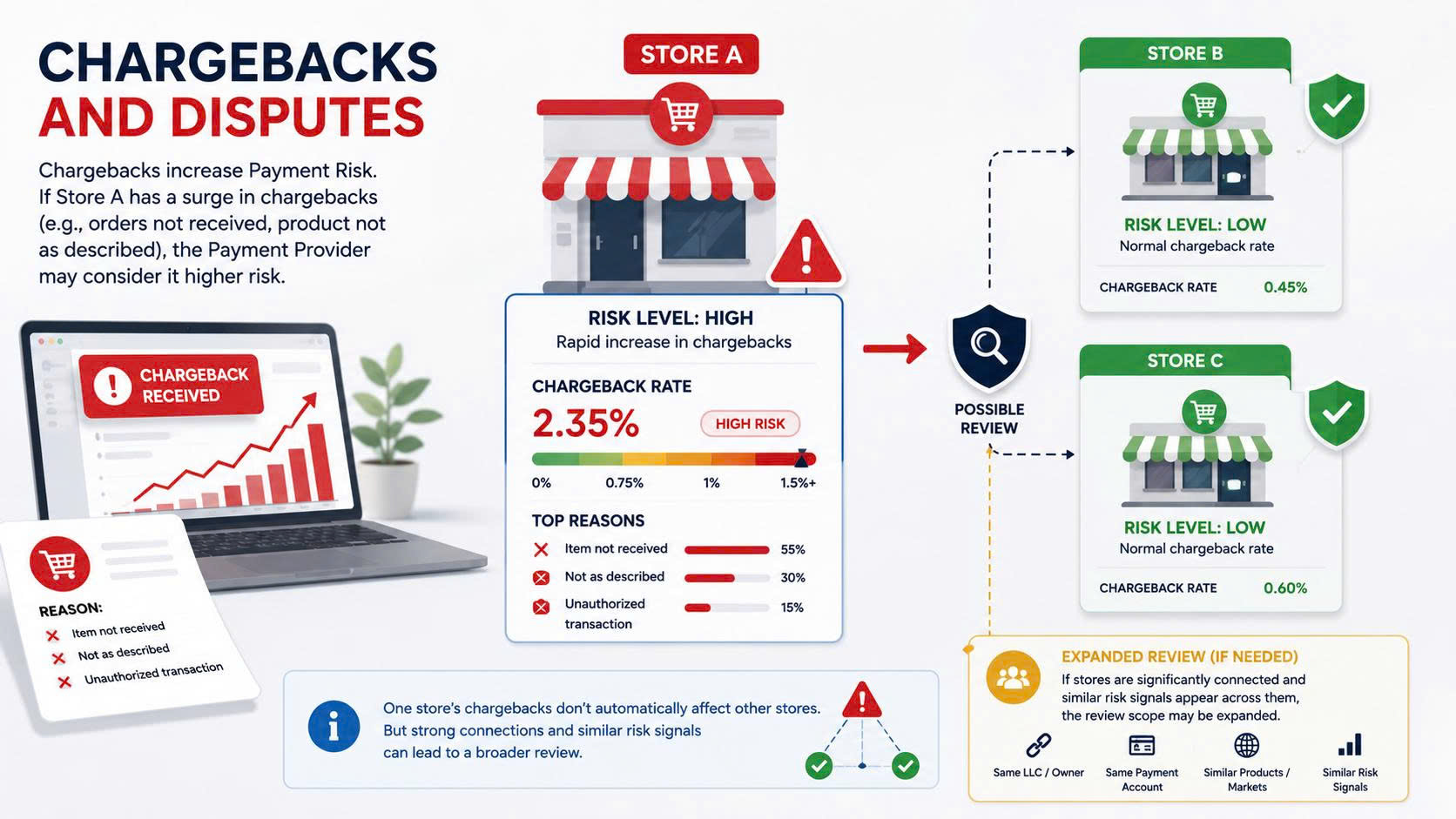
Chargebacks are an important factor in Payment Risk. If Store A experiences a rapid increase in Chargebacks, especially due to issues such as customers not receiving their orders or products not matching their descriptions, the Payment Provider may consider the Store to have a higher Risk level. This does not mean Store B and Store C will automatically be affected.
However, if the Stores have significant connections and similar Risk Signals appear across them, the scope of the Review may be expanded depending on the situation.
5. Refunds and Customer Complaints
A high Refund Rate is another factor sellers should monitor.
A Store that continuously generates Refunds because of:
- Products not matching their descriptions.
- Quality not meeting customer expectations.
- Extremely slow Shipping.
- Customers not receiving their orders.
- Misleading product information.
May need to review its entire Product, Fulfillment, and Customer Experience process. Payment Risk does not necessarily start with the Payment Account. It can originate from the Store’s actual operations.
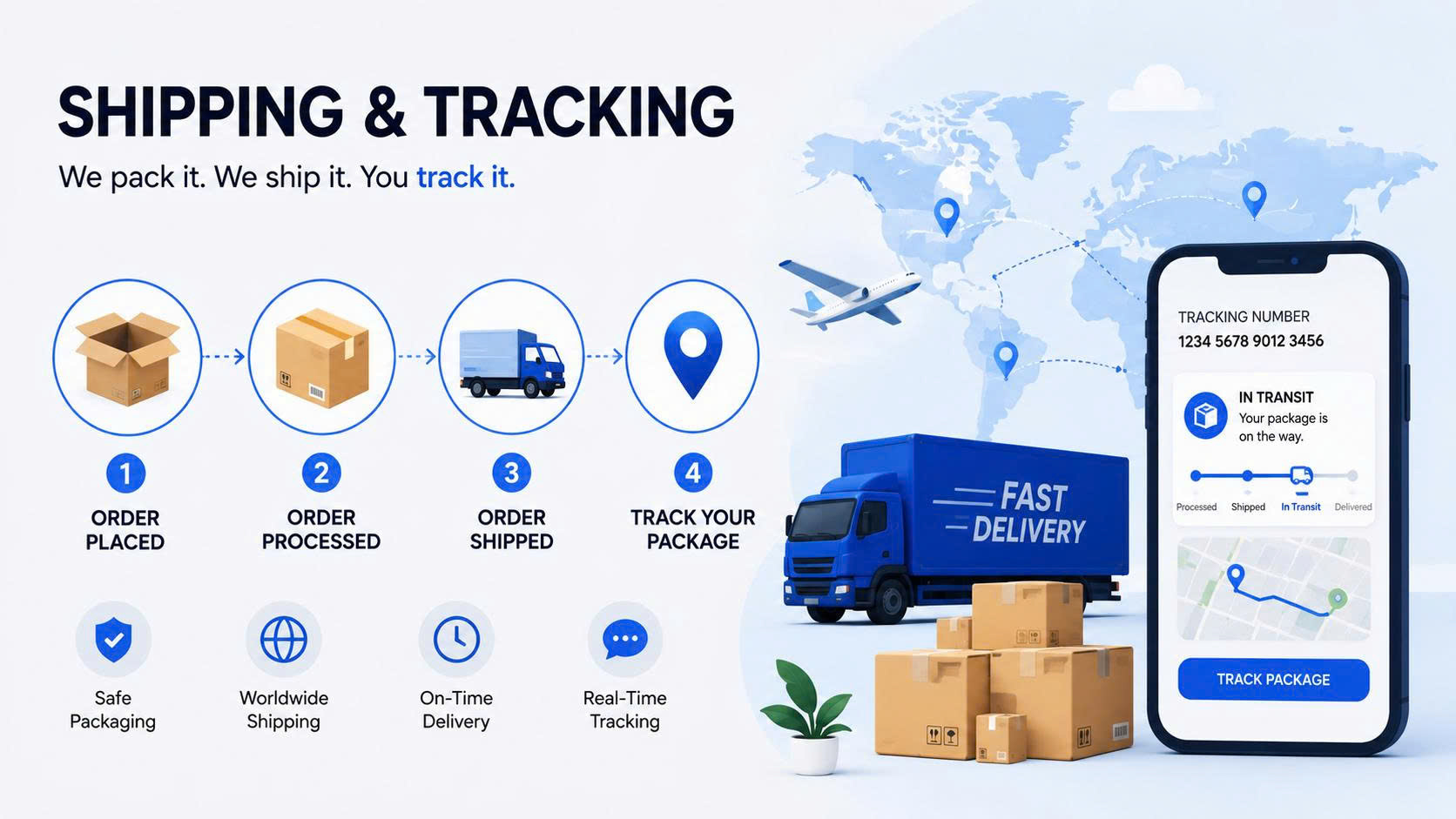
6. Shipping and Tracking
This is particularly important for POD, Dropshipping, and Cross-border E-commerce.
A seller may receive payments but frequently:
- Fail to provide Tracking.
- Have delayed Tracking updates.
- Ship orders late.
- Have a low successful Delivery Rate.
At that point, the issue is no longer simply about Shipping. It can lead to Refunds, Disputes, Chargebacks, and ultimately higher Payment Risk.
If One Store Is Under Payment Review, Will Other Stores Be Suspended?
There is no general rule stating that if one Store is reviewed, all Stores under the same LLC will definitely be suspended.
One possible scenario is: Store A is reviewed → Store B and Store C continue operating normally.
However, another possible scenario is that the Payment Provider needs to evaluate other Stores with significant connections to the Store under Review.
This depends on factors such as:
- Business Structure.
- Payment Setup.
- Transaction History.
- Risk Signals.
- Chargebacks and Disputes.
- Business Information.
- Actual activity of each Store.
Therefore, sellers should not assume either: “Same LLC means all Stores will definitely be affected.” or: “Different Stores are completely unrelated.”
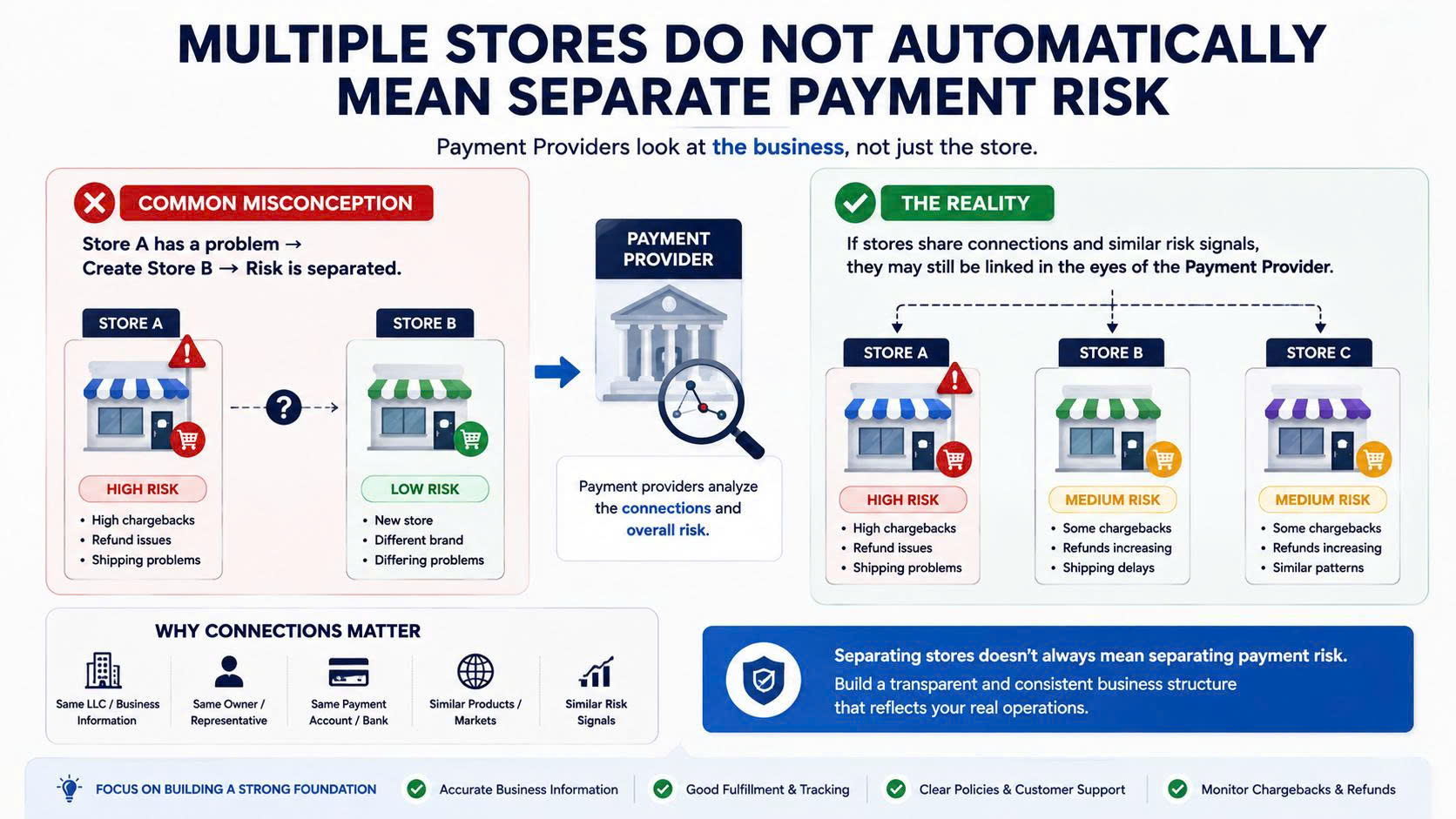
Multiple Stores Do Not Automatically Mean Separate Payment Risk
This is one of the most common misunderstandings when sellers start scaling.
Some sellers assume:
Store A has a problem → Create Store B → Payment Risk is separated.
However, creating another Shopify Store does not automatically create a completely independent Payment Environment.
If multiple Stores still share relationships involving the Business, Owner, Payment Setup, or business activities, the Payment Provider may still evaluate those connections.
Therefore:
Separating Stores does not necessarily mean separating Payment Risk.
The goal should not be to find ways to “avoid” the Risk system.
Instead, sellers should build a transparent, consistent structure that accurately reflects their actual business operations.
How Important Is Payment Setup When Operating Multiple Stores?
When you only have one Shopify Store, Payment Setup is usually relatively simple. But when a business grows to 3, 5, or 10 Stores, things become significantly more complex.
Sellers need to clearly manage:
- Which Store uses which Payment Provider.
- Revenue generated by each Store.
- Cash flow from each business activity.
- Business Information.
- Product and Business Model.
- Refunds and Chargebacks.
- Fulfillment and Tracking.
- Business documentation.
- Customer Support.
A good Payment Setup is not only about accepting payments. It should also match the company’s scale, business model, and growth rate.
When Should Sellers Pay Extra Attention?
Sudden Revenue Growth
Rapid growth is the goal of E-commerce. However, if Transaction Volume changes dramatically within a short period, sellers should make sure that their operational systems and Business Information can properly explain that growth.
Increasing Chargebacks
Revenue may increase, but if Chargebacks also rise significantly, this is a signal sellers should not ignore.
Fulfillment Cannot Keep Up
Scaling order volume while Shipping becomes slower, Tracking is missing, or Delivery Rates decline can lead to more Refunds and Disputes.
Inconsistent Business Information
Information across the Payment Account, Website, Business Documents, and Verification documents should accurately reflect the actual business activity.
Too Many Stores Without a Management System
As the number of Stores increases, manually managing Payments, Refunds, Chargebacks, Fulfillment, and Cash Flow becomes increasingly difficult.
This is when sellers need to shift from simply thinking about “opening more Stores” to building an E-commerce system that can actually scale.
If One Store Gets a Payment Review, What Should Sellers Do?
1. Check the Exact Review Request
First, carefully read the notification from the Payment Provider to determine what they are asking you to verify.
It may relate to:
- Business Verification.
- Identity Verification.
- Business Documents.
- Supplier Information.
- Transaction Information.
- Shipping Information.
- Other supporting documents.
2. Provide Accurate Information
The information submitted to the Payment Provider should accurately reflect the actual business activity. Sellers should not provide false information or change their business information simply to avoid the Review process.
3. Review the Other Stores
If you operate multiple Stores, this is a good time to review the entire system:
Payment Setup → Business Information → Website → Product → Shipping → Refund Policy → Customer Support → Transaction Pattern
Reviewing these areas early can help sellers identify potential weaknesses before scaling further.
4. Focus on Risk Management
Instead of only asking: “How can I prevent my Store from being reviewed?”
sellers should build a system that reduces the factors that may lead to higher Risk:
- Stable Fulfillment.
- Complete Tracking.
- Clear Product Information.
- Strong Customer Support.
- Refund management.
- Chargeback monitoring.
- Cash Flow management.
- Complete Business Documentation.
Conclusion
Having one store undergo a payment review does not necessarily mean that other stores under the same LLC will be affected.
However, sellers should not assume that every Shopify store operates as a completely isolated system. When multiple stores share connections regarding business ownership, payment setups, transactions, or operational activities, payment providers may consider these related signals when assessing risk.
Therefore, when scaling an e-commerce business, the question is not simply: “How many stores can a single LLC open?”
More importantly, the question is: “Are my payment setup and operational systems robust enough to scale multiple stores?”
A sustainable ECommerce business requires a cohesive approach across business structure, payment setup, risk management, fulfillment, and cash flow.
EasyPay onBoard – Your success is our satisfaction