
The rapid advancement of artificial intelligence (AI) is reshaping both the technology and financial sectors. Beyond automating business processes, AI is encouraging major corporations to restructure their organizations and focus on high-growth opportunities.
Recently, Visa announced a workforce reduction of approximately 2.600 employees, primarily within its Technology and Product divisions.
However, this decision is about much more than reducing headcount. It reflects how AI is redefining the future of the payments industry. So, what does this mean for businesses and international online sellers?
Why Did Visa Cut Around 2.600 Jobs?
The layoffs mainly affect Visa’s technology and product development teams.
From the outside, this may appear to be a direct consequence of AI replacing workers. In reality, Visa’s restructuring serves two strategic objectives:
- Improve operational efficiency through AI.
- Reallocate resources toward higher-growth business areas.
In other words, AI is not simply helping Visa reduce costs it is enabling the company to invest more aggressively in strategic initiatives that will drive future growth.
How Is AI Changing Visa?
AI Reduces Repetitive Work
Within large technology companies, engineering teams spend significant time on repetitive tasks before they can focus on innovation.
Examples include:
- Writing technical documentation
- Generating initial source code
- Software testing
- System log analysis
- Report generation
- Operational data analysis
These activities previously consumed hundreds of working hours every month. Today, modern AI models can complete many of these tasks within minutes. Rather than replacing software engineers, AI allows them to dedicate more time to designing systems, developing products, and solving complex, high-value problems. This is one of the key reasons why many technology companies are streamlining their organizations while maintaining rapid innovation.
AI Accelerates Product Development
According to Visa, AI is transforming the way technology teams build products. Instead of following lengthy traditional development cycles, AI can assist throughout the entire process from brainstorming and coding to testing and performance analysis.
As a result, Visa can:
- Shorten development cycles
- Launch products faster
- Reduce operational costs
- Improve engineering productivity
This explains why AI has become a core pillar of Visa’s long-term technology strategy.
Where Will Visa Invest After the Restructuring?
The savings generated from the restructuring are expected to be reinvested into several strategic growth areas.
Cross-Border Payments
Cross-border payments remain one of the fastest-growing markets as global eCommerce continues expanding.
Business Payments
Companies increasingly demand automated payment workflows, expense management solutions, and efficient international transactions.
Stablecoins
Stablecoins are gaining attention as financial institutions explore faster and lower-cost payment methods for selected use cases.
Artificial Intelligence
Beyond improving internal operations, Visa plans to integrate AI into its payment products and services.
Next-Generation Payment Infrastructure
Visa is also investing in payment infrastructure capable of supporting future transaction models, including AI-powered autonomous agents.
How Will the Payments Industry Change?
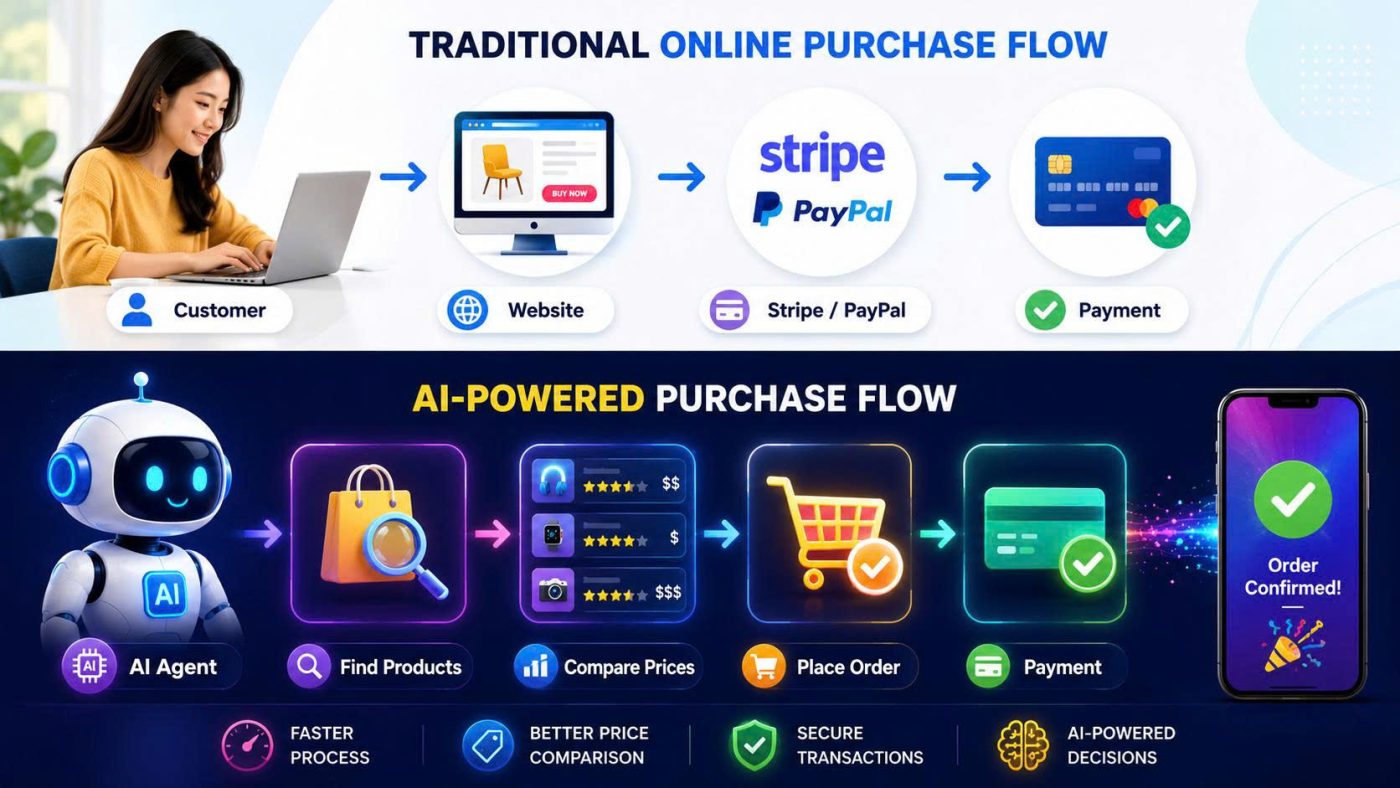
For years, online purchasing has followed a familiar process:
- Customer → Website → Stripe/PayPal → Payment
AI is introducing an entirely new model:
- AI Agent → Product Search → Price Comparison → Purchase → Payment
Instead of manually browsing websites, AI agents may soon represent buyers by searching for products, comparing prices, selecting merchants, and completing purchases automatically. This shift will require payment providers to develop new standards that allow AI systems to communicate with payment infrastructure securely and reliably.
This Trend Goes Beyond Visa
Visa is far from the only company moving in this direction.
This year, several major technology and fintech companies have simultaneously:
- Reduced selected positions
- Increased AI investment
- Expanded automation
- Accelerated new product development
Notable examples include:
- Mastercard
- Block
- Meta
- Amazon
The common strategy among these companies is using AI as a foundation for improving productivity not merely as a supporting tool. This signals that AI is becoming a fundamental driver of innovation across the technology industry.
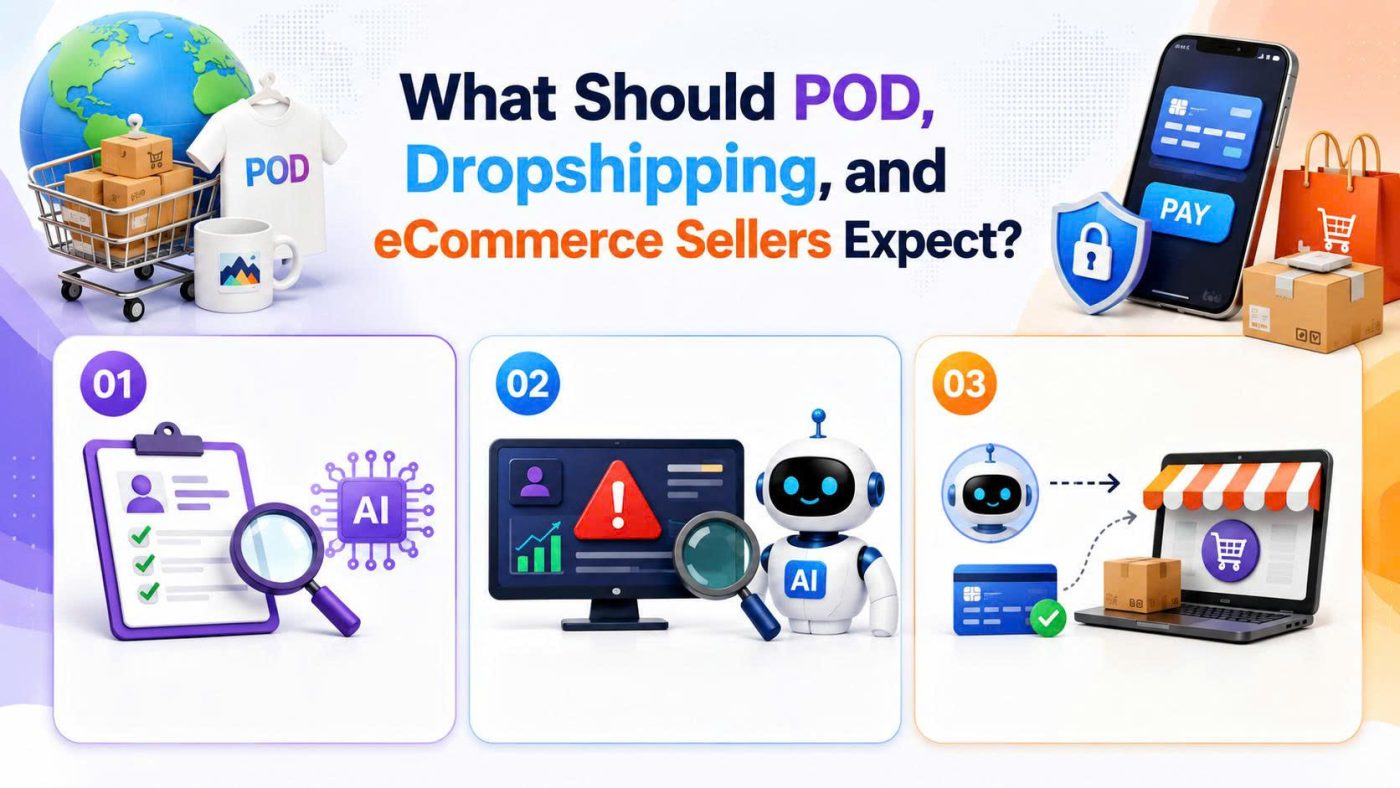
What Should POD, Dropshipping, and eCommerce Sellers Expect?
For international online sellers, these changes will have significant implications over the coming years.
Smarter KYC Reviews
AI-powered verification systems will evaluate accounts using far more than business documentation. Transaction behavior, sales history, website quality, customer experience, and dispute rates may all contribute to a merchant’s overall risk profile.
Stronger Fraud Detection
AI enables payment providers to identify suspicious activities in near real time. As a result, fraudulent behavior and attempts to bypass platform policies will become increasingly difficult.
More Automated Payments
As AI agents become more common, websites and payment gateways will need to support new communication standards that allow AI to complete transactions securely on behalf of users.
How Should Businesses Prepare Today?
Regardless of how rapidly AI evolves, transparency and compliance remain the foundation of sustainable business growth.
If you sell internationally, consider taking the following steps:
- Build a professional website with complete business information.
- Maintain accurate and up-to-date business documentation.
- Fully comply with KYC requirements.
- Monitor chargeback and refund rates closely.
- Keep invoices, supplier records, and supporting documentation.
- Choose payment solutions that match your business model.
- Stay informed about policy updates from Visa, PayPal, and Stripe.
These practices can significantly reduce risk as AI becomes more deeply integrated into global payment systems.
Conclusion
Visa’s decision to reduce approximately 2,600 positions is not simply a story of AI replacing people. More importantly, it signals that the payments industry is entering a new era in which AI serves as the foundation for product development, risk management, and transaction processing.
For businesses operating in POD, dropshipping, and eCommerce, adapting to these changes will be essential. A transparent payment operation, strong KYC compliance, and a reliable payment infrastructure will help reduce risk, support sustainable growth, and prepare businesses for the next generation of digital payments.
EasyPay onBoard – Your success is our satisfaction