
In digital businesses like selling files, software, or game top-up services, payment gateways are one of the most important yet often overlooked factors.
Choosing the wrong gateway from the start can lead to lost orders, held funds, or even complete disruption of cash flow.
This article from EasyPay onBoard will help you understand why this digital sector is “difficult,” and the most popular and suitable payment gateways currently available.
Why digital products are high-risk for payment processing
Digital products are fundamentally different from physical goods:
- Customers can access the product immediately
- It is difficult to prove “delivery” of goods
- Higher refund rates compared to physical products
- More frequent international disputes (chargebacks)
Because of this, payment gateways often classify digital businesses as high-risk and apply strict monitoring and controls.
Common payment gateways for digital products
PayPal
PayPal is one of the most well-known payment gateways in the digital space.

Advantages:
- Widely trusted by international users
- Creates a strong sense of security during checkout
- Suitable for fast and simple transactions
Disadvantages:
- High risk of fund holds for new or rapidly growing accounts
- Buyer protection policies often favor customers
- Accounts may be limited in case of frequent disputes
Best for:
- Beginners
- Small-scale digital file sales
- Testing international markets
Stripe
Stripe is a popular choice for more professional and scalable digital businesses.
Advantages:
- Direct credit/debit card payments (Visa, Mastercard)
- Fast and stable payout processing
- Strong support for subscriptions and automation
- Powerful API for website or app integration
Disadvantages:
- Requires a clear website and business structure
- Strict onboarding and verification process
- Needs proper initial setup
Best for:
- Software sales
- SaaS (Software as a Service) businesses
- Large-scale digital businesses
Which One Should You Choose?
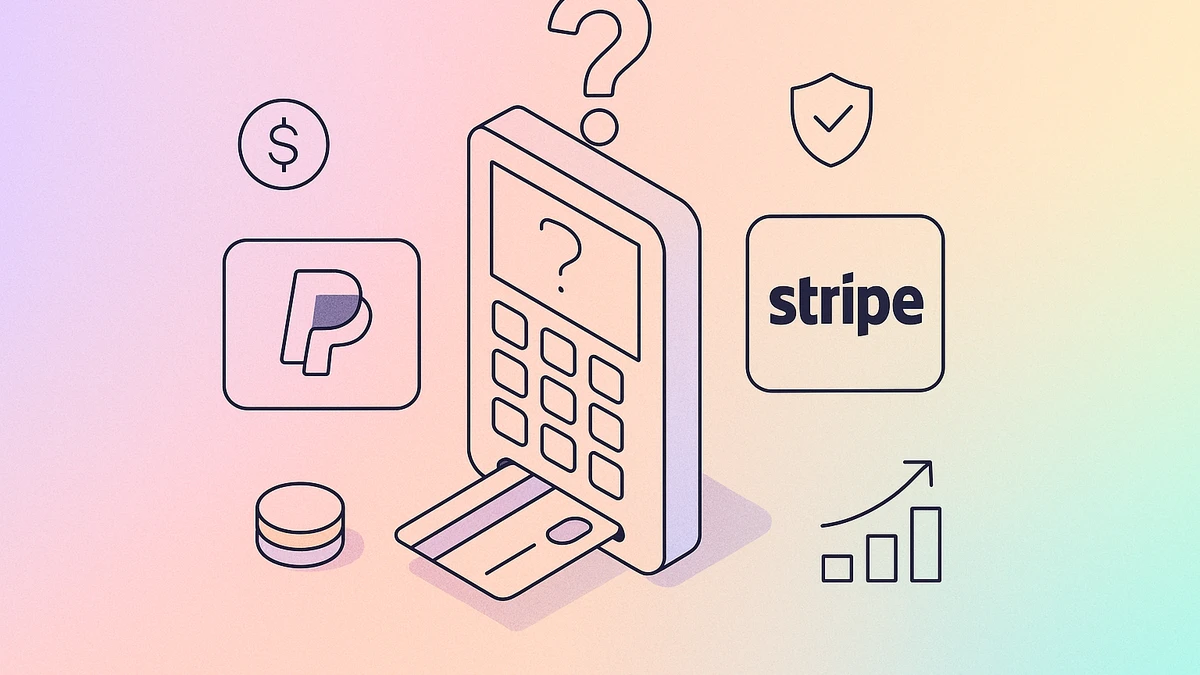
The choice between PayPal and Stripe depends on your business stage and model:
- If you are starting out or testing digital products, PayPal is easier to launch quickly.
- If you are building a long-term software or SaaS business, Stripe offers better scalability and control.
Many successful digital businesses eventually use both to balance conversion rate and operational stability.
Conclusion
PayPal and Stripe are the two core payment gateways for digital businesses selling files, software, and online services.
PayPal provides accessibility and trust, while Stripe provides scalability and technical flexibility.
Selecting the right gateway from the beginning helps reduce operational risks and ensures smoother business growth in the long term.