
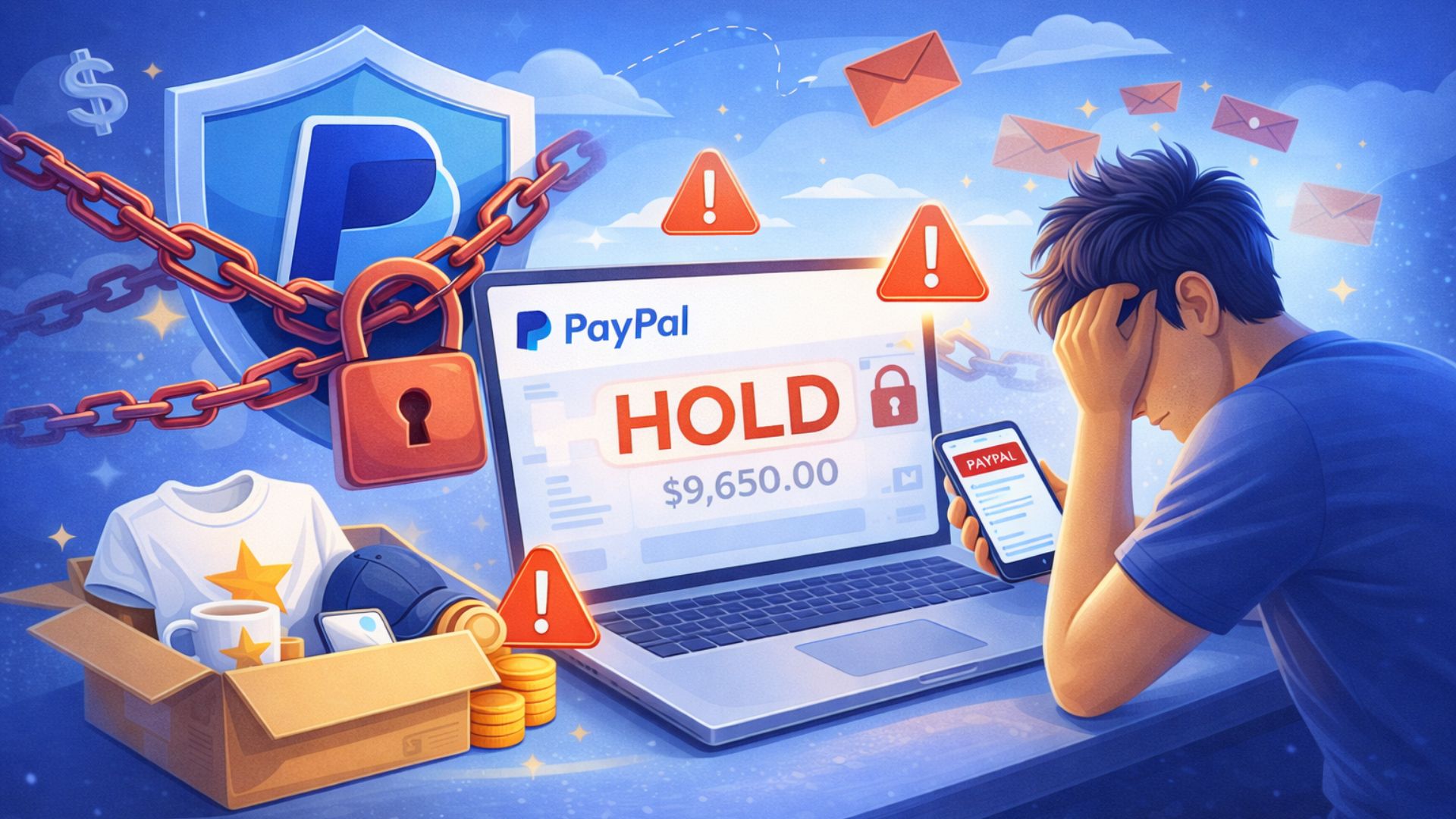
Many POD and dropshipping sellers often face situations where PayPal holds their funds or even limits their accounts without a clear reason. This disrupts business operations, affects cash flow, and makes scaling difficult. In reality, PayPal doesn’t penalize you randomly. They simply don’t have enough data yet to trust that you are a safe business. So how do you gain PayPal’s trust? The answer lies in how you operate your entire system not just your product. In this article, EasyPay onBoard will show you the key factors to become a “safe” business.
Why does PayPal hold funds?
PayPal is an intermediary payment platform, and they must ensure safety for both buyers and sellers. When their system detects potential risks, they may:
- Hold funds for review
- Apply a reserve as a precaution
- Limit your account if the risk is high
These signals usually come from how you operate your business, not from the product itself.
5 Factors That Make PayPal Trust You as a “Safe” Business
1. Your website must look like a real business
Your website is the first place PayPal evaluates your credibility. A “safe” website should include:
- A clear About page
- A Contact page with real information
- Complete Shipping, Refund, and Privacy policies
- A professional, polished design
If your website lacks these elements, PayPal may see you as an untrustworthy seller.
2. Shipping must have clear tracking
Tracking is the most important proof that you actually fulfill orders. A good system should have:
- A tracking number for every order
- Early tracking updates
- A “delivered” status
Without valid tracking, the risk of funds being held is very high.
3. Minimize disputes
Disputes are direct signals from customers to PayPal.
- Low dispute rate → safe account
- High dispute rate → high risk
To control disputes:
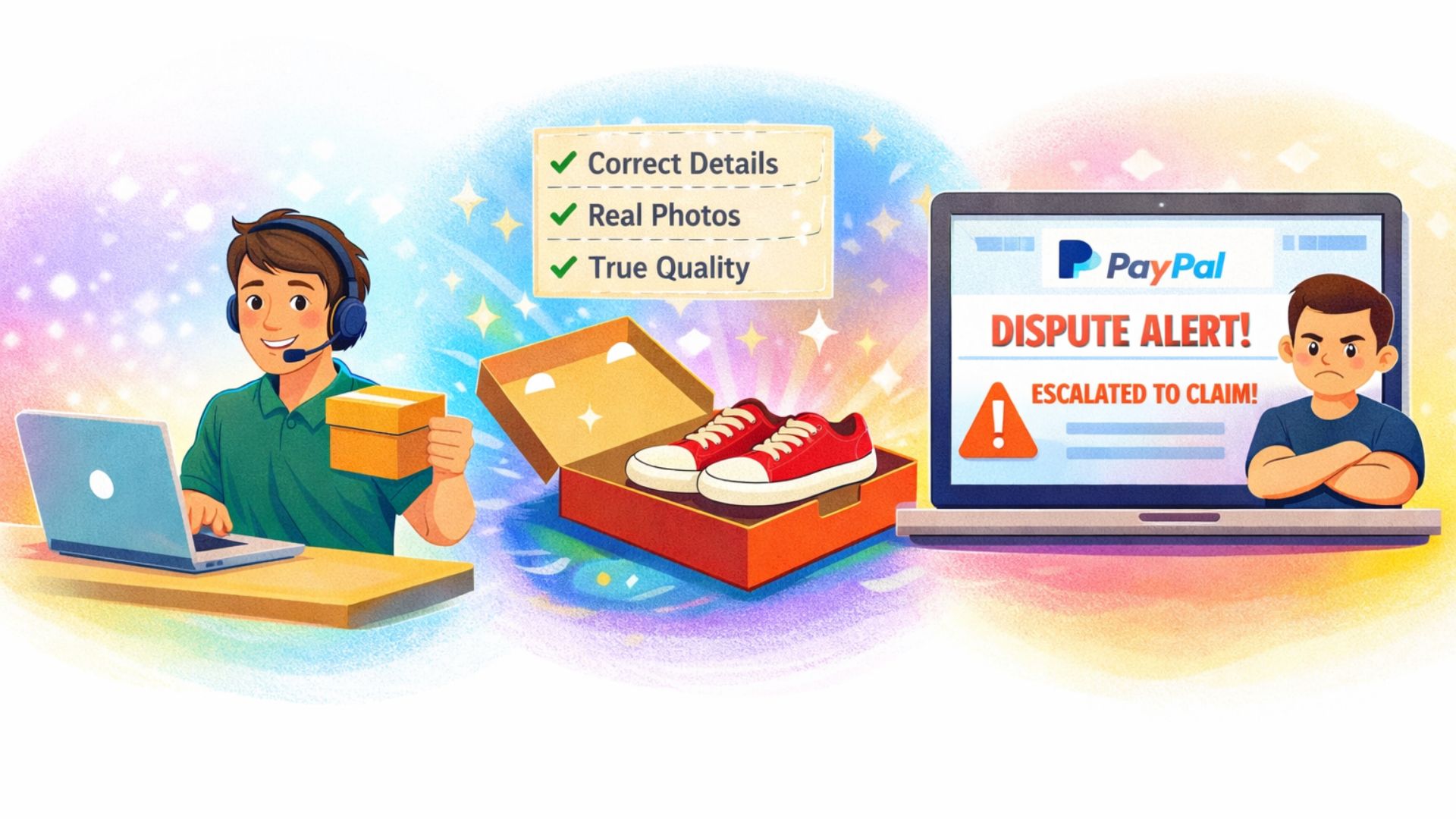
- Accurately describe your products
- Respond to customers quickly
- Proactively resolve issues
Resolving a dispute early is always better than letting customers escalate it to PayPal.
4. Avoid sudden growth spikes
PayPal is very sensitive to unusual growth patterns.
For example:
- Yesterday: a few orders
- Today: hundreds of orders
The system may flag this as suspicious activity.
Solutions:
- Scale gradually
- Increase ad budgets step by step
- Maintain stable growth
5. Keep your account behavior stable
Account behavior is also a key factor. Avoid:
- Frequently changing account information
- Logging in from multiple unfamiliar IP addresses
- Using inconsistent devices
PayPal favors accounts with stable and predictable behavior.
Common Mistakes That Break PayPal’s Trust
Many sellers encounter problems due to a basic mistake:
- Focusing only on products while ignoring the system
- Scaling too fast before stabilizing operations
- Not controlling disputes
- Slow shipping or no tracking
- Lack of transparency on the website
These factors can cause PayPal to classify you as high risk.
Long-Term Strategy to Build Trust with PayPal
To gain PayPal’s trust, you need to operate like a real business:
- A complete and transparent website
- Clear tracking for every order
- Keep disputes within a safe threshold
- Stable, gradual growth
- Consistent account behavior
Trust doesn’t come from a single factor it’s the result of your entire system.
Conclusion
If you want to avoid PayPal holds, you can’t just optimize products or ads. The key is building a clear, transparent, and stable operating system. When you run your business like a real company, PayPal will start to trust you. And once you have that trust, receiving payments, scaling, and growing becomes much easier.
EasyPay onBoard – Your success is our satisfaction